💚 TL;DR
- Turmeric soap benefits are rooted in curcumin — turmeric’s active polyphenolic compound — which has documented antioxidant, anti-inflammatory, and antimicrobial properties that support multiple aspects of skin health.
- The most evidence-backed turmeric soap benefits include reducing hyperpigmentation and dark spots, calming inflammatory skin conditions (acne, eczema, psoriasis), and providing antioxidant protection against UV and environmental damage.
- Topical curcumin has lower bioavailability than oral supplementation — the quality of the formulation and curcumin concentration matter significantly in determining how much benefit you actually receive.
- Most people can use turmeric soap safely, but it can temporarily stain skin yellow and cause contact dermatitis in sensitive individuals — always patch test before full use.
Turmeric soap has become one of the most popular natural skincare products of the past five years — and the trend is firmly rooted in evidence. Turmeric (Curcuma longa) has been used in Ayurvedic, South Asian, and traditional Chinese medicine for centuries to treat skin inflammation, promote wound healing, and improve complexion. Modern dermatology research is now beginning to validate these longstanding practices.
The active compound behind turmeric soap benefits is curcumin — a polyphenolic compound that accounts for approximately 2–5% of dry turmeric weight. Curcumin has been studied for its antioxidant, anti-inflammatory, antimicrobial, and skin-brightening properties across hundreds of peer-reviewed studies. When incorporated into topical skincare products like soap, it delivers these benefits directly to the skin surface.
This guide covers what the dermatology research actually shows about turmeric soap benefits, the specific skin conditions it may help with, honest assessment of the evidence, how to choose a quality product, and how to use it safely and effectively.
⚕️ Medical Disclaimer: This article is for informational purposes only. Turmeric soap is not a treatment for any medical skin condition. If you have a diagnosed skin disorder including psoriasis, eczema, or acne, consult a dermatologist before changing your skincare routine.
Last updated: May 2026
What Is Turmeric Soap?
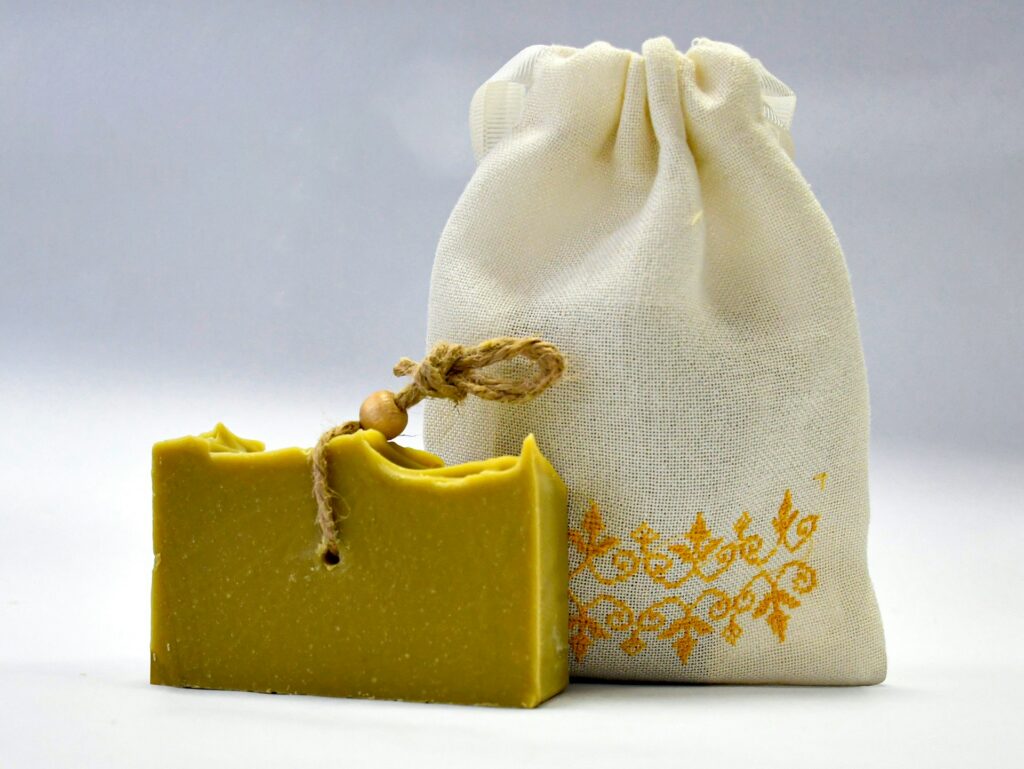
Turmeric soap is a topical cleansing product that incorporates turmeric extract, curcumin, or turmeric powder into a soap base. The quality of turmeric soap products varies considerably — the curcumin concentration, the soap base chemistry, and complementary ingredients all affect how much of the active compound reaches the skin and how effective the product actually is.
Most quality turmeric soaps combine turmeric extract with a nourishing base — commonly including glycerin, shea butter, jojoba oil, olive oil, and kojic acid or vitamin C to enhance the brightening effects. The formulation matters: a soap that lists turmeric powder as a late ingredient (indicating minimal concentration) will deliver far fewer turmeric soap benefits than one with turmeric root extract or curcumin listed as a primary active ingredient.
Turmeric has been central to South Asian and Ayurvedic skincare for centuries. Traditional pre-wedding turmeric ceremonies (haldi) in South Asian cultures apply turmeric paste to the skin for brightening before marriage — a practice that has been followed for over 4,000 years. Modern dermatology is now providing the scientific basis for these ancient turmeric soap benefits.
💡 Did You Know? Most research on curcumin — the active compound behind turmeric soap benefits — has focused on oral supplementation rather than topical application. However, a growing body of dermatology literature supports topical curcumin’s efficacy for specific skin conditions. Curology’s board-certified nurse practitioner review noted that studies have demonstrated curcumin may be effective against psoriasis, atopic dermatitis, skin infections, and even skin cancer. According to PubMed’s comprehensive curcumin skin research review, curcumin’s anti-inflammatory, antioxidant, and antimicrobial properties make it one of the most bioactively rich natural compounds for dermatological applications.
How Turmeric Soap Works on Skin
Turmeric soap works through four primary mechanisms, all driven by curcumin’s pharmacological properties.
Anti-inflammatory action. Curcumin inhibits multiple pro-inflammatory cytokines and enzymes — including NF-κB, COX-2, and LOX — that drive inflammatory skin conditions like acne, eczema, and rosacea. This anti-inflammatory mechanism is one of the most thoroughly documented properties of turmeric and directly underpins many turmeric soap benefits for reactive skin types.
Antioxidant protection. Curcumin is a powerful free radical scavenger. It neutralises reactive oxygen species (ROS) generated by UV radiation and environmental pollutants — the same free radicals that damage collagen, accelerate skin ageing, and contribute to hyperpigmentation. Turmeric soap applied during cleansing delivers antioxidant activity to the skin surface as part of a daily routine.
Melanin inhibition. Curcumin inhibits the activity of tyrosinase — the enzyme responsible for producing melanin in the skin. By reducing tyrosinase activity, turmeric soap benefits include reducing the formation of new hyperpigmentation, dark spots, and uneven skin tone over consistent use.
Antimicrobial activity. Curcumin has demonstrated antimicrobial properties against multiple bacteria relevant to skin health — including Staphylococcus aureus (a major driver of acne and skin infections) and Propionibacterium acnes (the bacteria primarily responsible for acne lesions). This antimicrobial mechanism directly supports turmeric soap benefits for acne-prone skin.
7 Turmeric Soap Benefits Backed by Research
1. Turmeric Soap Benefits for Skin Brightening
Skin brightening is the most widely cited and consistently reported of all turmeric soap benefits. Curcumin’s tyrosinase inhibition reduces melanin production, which over time leads to a more even, luminous skin tone. This effect is cumulative — most users report visible brightening after 4–8 weeks of consistent daily use.
The brightening turmeric soap benefits are most pronounced for people with naturally golden or olive undertones in their skin — the traditional demographic who have used turmeric in skincare for millennia. However, the anti-pigmentation mechanism is effective across all skin tones, with the most visible results on hyperpigmented areas rather than uniformly light skin.
2. Turmeric Soap Benefits for Acne
The antimicrobial and anti-inflammatory properties of curcumin produce meaningful turmeric soap benefits for acne-prone skin. Curcumin inhibits the growth of Propionibacterium acnes — the primary acne-causing bacteria — while simultaneously reducing the inflammation that makes acne lesions red, swollen, and painful.
Multiple clinical studies have demonstrated curcumin’s efficacy against inflammatory skin conditions including acne. For mild to moderate acne, turmeric soap benefits include reduced breakout frequency, faster healing of existing lesions, and reduced post-inflammatory hyperpigmentation (the dark marks that persist after spots heal).
3. Turmeric Soap Benefits for Hyperpigmentation and Dark Spots
Hyperpigmentation — including sunspots, melasma, post-inflammatory hyperpigmentation (PIH), and age spots — is one of the most common and most difficult-to-treat skin concerns. Turmeric soap benefits for hyperpigmentation work through two complementary mechanisms: inhibiting new melanin production (via tyrosinase inhibition) and reducing inflammation that triggers melanin overproduction after skin trauma.
Research cited by Curology’s dermatology team found that curcumin may be effective against various forms of hyperpigmentation. For best results, combine turmeric soap with a daily SPF — sun exposure is the primary driver of hyperpigmentation, and no brightening ingredient can outperform unprotected sun exposure.
4. Turmeric Soap Benefits for Eczema and Psoriasis
The anti-inflammatory properties of curcumin are particularly relevant for chronic inflammatory skin conditions. Studies have demonstrated that curcumin may be effective against psoriasis and atopic dermatitis — two of the most prevalent and challenging skin conditions globally.
Turmeric soap benefits for eczema and psoriasis are largely palliative rather than curative — they reduce the inflammation, redness, and irritation associated with flares rather than treating the underlying immune dysfunction driving the condition. Always use turmeric soap as a complement to — not a replacement for — medically prescribed treatments for these conditions.
5. Turmeric Soap Benefits for Anti-Ageing
The anti-ageing turmeric soap benefits come through two pathways: antioxidant protection against photoageing (UV-induced skin ageing) and stimulation of collagen synthesis. Curcumin has been shown to combat photoageing by neutralising free radicals generated by UV radiation before they can damage collagen and elastin fibres.
Regular use of turmeric soap as part of an antioxidant-rich skincare routine can reduce the visible signs of environmental ageing — fine lines, dullness, and texture changes — over time. These turmeric soap benefits are most significant for people with significant sun exposure and less for those who already have excellent sun protection habits.
6. Turmeric Soap Benefits for Wound Healing
Curcumin accelerates wound healing through multiple mechanisms: it reduces wound inflammation, promotes fibroblast proliferation (new tissue formation), and increases collagen deposition in healing tissue. A study in India reported successful treatment of chronic ulcers and scabies using a topical preparation containing turmeric — historically one of the most documented traditional turmeric skin applications.
For everyday skin concerns — minor cuts, abrasions, and post-procedure healing — turmeric soap benefits include accelerated healing time and reduced risk of secondary infection (through its antimicrobial properties). However, turmeric soap should not be used directly on open wounds.
7. Turmeric Soap Benefits for Oil Control
Curcumin’s sebum-regulating properties make turmeric soap a useful option for oily and combination skin types. By reducing the inflammation that drives excess sebum production and providing antimicrobial activity that prevents pore-clogging bacterial overgrowth, turmeric soap benefits oily skin as a gentle but effective cleanser that controls shine without stripping the skin’s moisture barrier.
Honest Limitations of Turmeric Soap
An evidence-based review of turmeric soap benefits must also address what the research does not support. A comprehensive dermatology review from Viveve Health (April 2026) identified several overstated turmeric soap claims that are not supported by evidence.
Topical bioavailability is limited. Curcumin has poor water solubility and limited skin penetration in its standard form. This is why most curcumin research focuses on oral supplementation rather than topical application — the molecule does not easily cross the skin barrier. Quality turmeric soap formulations address this by using curcumin in nanoemulsion or liposomal forms, or by combining with penetration enhancers like jojoba oil.
Contact time matters. Soap is a rinse-off product — it spends approximately 30–60 seconds on skin before being washed away. This limited contact time reduces the amount of active ingredient delivered compared to leave-on products like serums or moisturisers. Turmeric soap benefits are real but necessarily more modest than leave-on turmeric products at equivalent concentrations.
Not a cure for serious skin conditions. Turmeric soap will not eliminate deep scars, permanently lighten skin, or reverse significant sun damage. The Viveve Health review notes these as explicitly unsupported claims. Turmeric soap benefits are real and measurable — but they are cumulative, subtle, and take weeks of consistent use to become visible.
How to Choose a Quality Turmeric Soap
Not all turmeric soaps are equal. These principles help you identify products that will actually deliver the turmeric soap benefits the research supports.
Check the ingredient position. Ingredients are listed in order of concentration. Turmeric extract or curcumin should appear in the top half of the ingredient list — not as the very last ingredient (which indicates a marketing sprinkle with negligible active content).
Look for complementary ingredients. The best turmeric soaps combine curcumin with ingredients that enhance its penetration and efficacy: jojoba oil (penetration enhancer and anti-inflammatory), vitamin C or kojic acid (complementary brightening agents that work synergistically with curcumin), shea butter or glycerin (moisturising to prevent barrier disruption), and licorice root extract (additional tyrosinase inhibitor that amplifies brightening turmeric soap benefits).
Avoid harsh sulphates. Sodium lauryl sulphate (SLS) in a turmeric soap base disrupts the skin’s moisture barrier and triggers inflammation that directly counteracts the anti-inflammatory turmeric soap benefits you are trying to achieve. Look for gentler cleansing agents like sodium cocoyl glutamate or sodium lauryl glutamate.
Choose concentrated extract over powder. Turmeric root extract or curcumin extract provides more bioavailable active compound than raw turmeric powder in a soap base. The Intelligent Labs review noted that turmeric soap benefits depend significantly on the form and concentration of curcumin used — not just on the presence of turmeric on the label. Our article on turmeric and black pepper covers how piperine from black pepper dramatically increases curcumin bioavailability — a principle some topical formulators are now beginning to apply.
How to Use Turmeric Soap Effectively
Using turmeric soap correctly maximises the benefits you receive from each wash.
Use daily — consistency is everything. The brightening and anti-inflammatory turmeric soap benefits accumulate over weeks of consistent use. Single or occasional use delivers minimal visible benefit. Use it as your primary facial or body cleanser once or twice daily depending on your skin type.
Allow brief contact time. Rather than applying and rinsing immediately, work the lather into the skin and leave for 30–60 seconds before rinsing. This brief additional contact time significantly increases the amount of curcumin that reaches the skin surface and begins to work.
Follow with moisturiser. Turmeric soap is most effective as part of a complete skincare routine — cleanse with turmeric soap, then apply a moisturiser to lock in hydration and prevent barrier disruption. For enhanced brightening turmeric soap benefits, follow with a vitamin C serum or niacinamide moisturiser that works synergistically with curcumin’s tyrosinase inhibition.
Always wear SPF. Sun exposure is the primary driver of hyperpigmentation and photoageing — the exact concerns that turmeric soap benefits most directly. Without daily SPF, the brightening effects of turmeric soap will be continuously undermined by UV-driven melanin stimulation. According to NHS sun safety guidance, SPF 30 or higher is recommended for daily use in the UK year-round.
Turmeric Soap Side Effects and Precautions
Skin staining. The most commonly reported and entirely harmless side effect of turmeric soap is temporary yellow-orange staining of the skin — particularly on lighter skin tones. This washes off completely with normal cleansing and typically fades within minutes. Using a washcloth or flannel during rinsing reduces staining. Note that turmeric soap can stain white towels and washcloths permanently — use coloured textiles with turmeric products.
Contact dermatitis. A small number of people experience allergic contact dermatitis from curcumin — presenting as redness, itching, or a rash at the application site. Always perform a patch test on the inner arm 24 hours before using any new turmeric soap on the face or body. Discontinue immediately if irritation occurs.
Photosensitivity. Some formulations that combine turmeric with citrus essential oils or vitamin C may increase photosensitivity. Apply in the evening or ensure adequate SPF coverage when using turmeric soap in morning routines.
Frequently Asked Questions
What are the main turmeric soap benefits?
The main turmeric soap benefits are: skin brightening and reduction of hyperpigmentation (through tyrosinase inhibition); acne reduction (through antimicrobial and anti-inflammatory action); soothing of inflammatory conditions like eczema and psoriasis; antioxidant protection against UV and environmental damage; anti-ageing effects through collagen support; accelerated wound healing; and oil control for combination and oily skin types. These benefits are cumulative and require 4–8 weeks of consistent daily use to become clearly visible.
Does turmeric soap really lighten skin?
Turmeric soap does not permanently bleach or change natural skin tone — this is an unsupported claim. What it does is gradually reduce hyperpigmentation, even out skin tone, and brighten dull complexions through curcumin’s tyrosinase inhibition — which reduces the overproduction of melanin in specific areas. The brightening turmeric soap benefits are most visible on uneven areas, dark spots, and post-inflammatory marks, rather than producing uniform lightening of naturally pigmented skin.
How long does it take for turmeric soap to work?
Most people using turmeric soap consistently (once or twice daily) report visible skin brightening and texture improvement within 4–8 weeks. Anti-inflammatory benefits for acne and irritation are often noticeable sooner — within 2–3 weeks. Significant reduction in hyperpigmentation or dark spots typically takes 8–12 weeks of consistent daily use. Patience and consistency are the most important factors in achieving the turmeric soap benefits that the research demonstrates.
Can I use turmeric soap on my face every day?
Yes — most people can use turmeric soap on their face daily, provided the formulation does not contain harsh sulphates (SLS) that disrupt the skin barrier. Daily use is actually recommended — the turmeric soap benefits are cumulative and depend on consistent exposure to curcumin over time. If your skin feels tight or dry after washing, the soap may be too stripping for your skin type — switch to a gentler turmeric soap formulation with added glycerin or nourishing oils, or reduce to once daily use and follow with a rich moisturiser.
🌿 Ancient Wisdom, Modern Evidence
Turmeric soap benefits represent one of those relatively rare cases where traditional skincare wisdom and modern dermatology research align clearly. Curcumin is genuinely bioactive, genuinely anti-inflammatory, and genuinely brightening — when it is in the product at meaningful concentrations and used consistently over time. Choose well, patch test, be patient, and wear your SPF. The glow follows. 💚
✍️ About the Author
This article was written by the editorial team at Blooming Vitality, a health and wellness platform dedicated to evidence-based natural health guidance. Our skincare content is reviewed for accuracy against current peer-reviewed dermatology research and clinical guidelines.