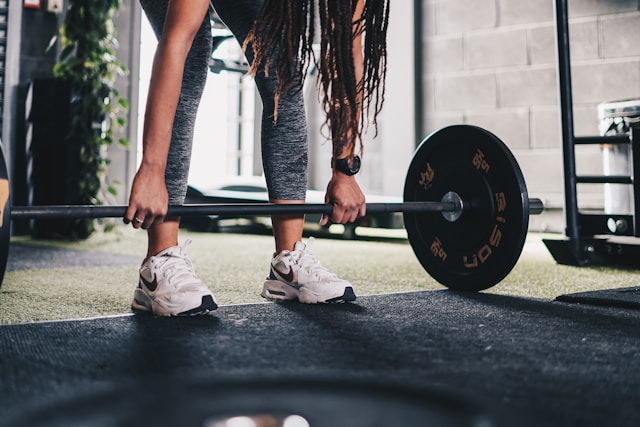
⚡ TL;DR — Glute Exercises
- The best glute exercises combine hip extension (squats, deadlifts), hip abduction (clamshells, lateral band walks), and hip thrust movements for complete glute development.
- Glute activation before training is critical — without it, your quads and lower back compensate and the glutes don’t grow.
- Training glutes 2–3x per week with progressive overload produces the best results.
- Strong glutes protect the lower back, improve posture, reduce knee pain, and boost athletic performance.
Glute exercises are among the most searched fitness topics — and rightly so. The gluteal muscles (gluteus maximus, medius, and minimus) are the largest muscle group in the body, and training them effectively transforms not just aesthetics but function. Strong glutes protect the lower back from injury, reduce knee pain by stabilising the pelvis, improve posture, and drive athletic performance across virtually every sport. Whether your goal is strength, shape, or injury prevention, this guide gives you the most effective glute exercises, the science behind why they work, and a complete routine to follow.
Understanding the Glute Muscles
The gluteal complex comprises three muscles: the gluteus maximus (the largest, responsible for hip extension and external rotation), the gluteus medius (the side of the hip, responsible for hip abduction and pelvic stability), and the gluteus minimus (deep to the medius, assisting with abduction and internal rotation). Most glute exercises target primarily the gluteus maximus, but complete glute development requires dedicated work for the medius and minimus as well — which are essential for single-leg stability, gait mechanics, and knee alignment.
The Science Behind Effective Glute Exercises
Research by Dr. Bret Contreras (widely known as “The Glute Guy”) using EMG (electromyography) measurements has consistently shown that the hip thrust activates the gluteus maximus to a significantly greater degree than squats or deadlifts — making it one of the highest-value glute exercises available. However, squats and deadlifts produce better overall leg development and should not be replaced entirely. The optimal glute program includes a variety of movement patterns across three planes of motion: sagittal (forward/back), frontal (side-to-side), and transverse (rotational). Glute activation exercises before heavier work are critical — people with “gluteal amnesia” (inactive glutes from prolonged sitting) who skip activation will compensate with the quads and lower back, significantly reducing glute stimulus even when performing technically correct exercises.
💡 Did You Know? Prolonged sitting causes “gluteal amnesia” — a term coined by physical therapist Stuart McGill — where the glutes become neurologically inhibited and stop firing properly during movement. This is why a desk worker can have relatively large glutes but still struggle to activate them during exercise. Activation drills are not optional — they’re essential.
8 Best Glute Exercises
1. Hip Thrust
The single most effective glute isolation exercise available. With your upper back on a bench and a barbell or dumbbell across your hips, drive through your heels to thrust the hips toward the ceiling, squeezing the glutes hard at the top. The key is full hip extension at the top — don’t stop halfway. 3–4 sets of 10–15 reps. This is the cornerstone of any serious glute exercises program.
2. Barbell Back Squat / Goblet Squat
Squats hit the glutes, quads, and hamstrings simultaneously. To maximise glute activation, aim for a deeper squat (below parallel if mobility allows) and focus on driving the knees out through the movement. 3–4 sets of 8–12 reps. The goblet squat is an excellent starting point that naturally promotes upright posture and glute engagement.
3. Romanian Deadlift (RDL)
The RDL is one of the best posterior chain glute exercises — with a strong stretch on both the glutes and hamstrings in the bottom position. Hinge at the hip with soft knees, lowering the weight along your legs until you feel a strong stretch in the hamstrings, then squeeze through the glutes to return to standing. 3 sets of 8–12 reps.
4. Bulgarian Split Squat
One of the most challenging and effective single-leg glute exercises. With the rear foot elevated on a bench, lower into a deep lunge, keeping most of the weight in the front heel. This produces intense glute and quad activation while building single-leg stability. 3 sets of 8–10 reps per leg — challenging enough that you’ll need no more than your bodyweight to start.
5. Clamshell
The primary activation exercise for the gluteus medius. Lying on your side with knees bent to 90°, keeping feet stacked, rotate the top knee upward like a clamshell opening while keeping the pelvis stable. Add a resistance band just above the knees for progression. 3 sets of 15–20 reps per side. Essential for knee health and hip stability.
6. Lateral Band Walk
Another essential gluteus medius exercise. With a resistance band above the knees, adopt an athletic stance (slight squat, weight forward), and step laterally maintaining constant tension on the band. Keep toes pointing forward throughout. 3 sets of 12–15 steps each direction. Often underestimated, this exercise produces immediate changes in glute activation quality.
7. Glute Bridge
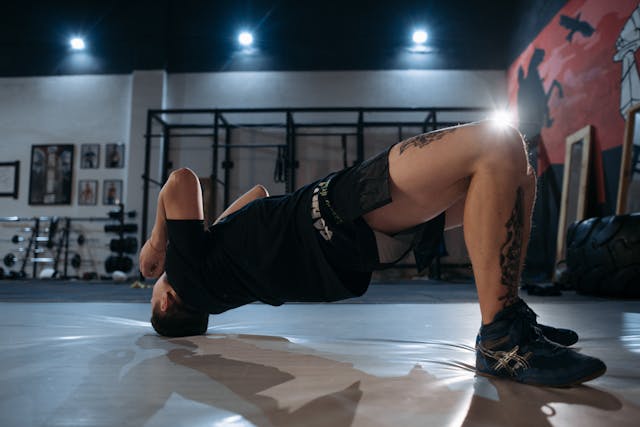
The bodyweight version of the hip thrust — ideal as an activation exercise or for home training. Lying on your back, feet hip-width apart, drive through the heels to lift the hips toward the ceiling and hold for 2–3 seconds at the top before lowering. Progress by adding a barbell, plate, or resistance band. 3 sets of 15–20 reps with 3-second holds.
8. Step-Up
Step-ups are excellent functional glute exercises that build single-leg strength and stability while closely mimicking real-world movement patterns like climbing stairs. Use a box or bench at knee height, step up driving through the heel of the leading foot, and bring the trailing foot up to stand. Control the descent. 3 sets of 10–12 reps per leg.
Complete Glute Exercises Workout Routine
| Exercise | Sets | Reps | Rest |
|---|---|---|---|
| Clamshell (activation) | 2 | 20 per side | 30 sec |
| Lateral Band Walk (activation) | 2 | 15 steps each way | 30 sec |
| Hip Thrust | 4 | 10–15 | 90 sec |
| Romanian Deadlift | 3 | 10–12 | 90 sec |
| Goblet Squat | 3 | 10–12 | 90 sec |
| Bulgarian Split Squat | 3 | 8–10 per leg | 90 sec |
| Glute Bridge (hold) | 3 | 12 (3 sec hold) | 60 sec |
Common Glute Exercise Misconceptions
“Squats are enough for glute development.” Squats are excellent but primarily target the quadriceps. EMG research consistently shows squats produce lower peak glute activation than hip thrusts and RDLs. For maximum glute development, include dedicated hip thrust and posterior chain work alongside squats.
“High reps and no weight will tone the glutes without building size.” Muscle “toning” requires the same stimulus as muscle growth — progressive overload. Endless bodyweight repetitions do not produce the same glute development as progressively loaded glute exercises. The shape you want comes from adding muscle, which requires load.
Building a Glute Training Plan
For optimal glute development, train glutes 2–3 times per week with at least 48 hours between sessions. Include 1–2 hip thrust variations, 1–2 hinge movements (RDL, deadlift), 1 squat pattern, and 1–2 glute medius exercises in each session. Progress by adding weight each week — even 2.5kg added to your hip thrust each session adds up to 30kg in 3 months. Track your lifts to ensure progressive overload is actually happening. For complementary fitness content and workout guidance, explore our Fitness section at Blooming Vitality. The American College of Sports Medicine and ACE Fitness offer science-based exercise programming resources.
When to Seek Professional Help for Glute Exercises
If you experience persistent lower back, hip, or knee pain during glute exercises — even after adjusting technique — consult a physiotherapist before continuing. Pain during glute exercises is often a sign of movement dysfunction (frequently from hip flexor tightness, weak glute medius, or ankle mobility limitations) that a professional can quickly identify and address. A personal trainer experienced in strength training can also ensure your technique is correct, particularly for loaded exercises like the barbell hip thrust and RDL.
💪 Strong glutes change everything.
Start with activation, load the hip thrust progressively, and train consistently 2–3x per week. Within 8–12 weeks, you’ll feel the difference in your posture, your lower back, your athletic performance, and yes — your shape. The glutes respond well to targeted training. Give them what they need.
Disclaimer: Consult a qualified healthcare professional or physiotherapist if you experience pain during exercise. This article is for educational purposes only.