⚡ TL;DR — Lion’s Mane Jellyfish
- The lion’s mane jellyfish (Cyanea capillata) is the world’s largest jellyfish — capable of reaching 2.4m across with tentacles over 36m long.
- Its sting causes painful but rarely life-threatening symptoms — burning, welts, and in severe cases systemic reactions like breathing difficulty.
- Don’t confuse it with lion’s mane mushroom supplement — they are entirely different organisms with different properties.
- If stung: remove tentacles with a card or gloved hand, rinse with seawater (not fresh water), and apply heat or vinegar depending on species — seek medical care for severe reactions.
The lion’s mane jellyfish (Cyanea capillata) is one of nature’s most spectacular and formidable marine creatures — and also one of the most commonly misunderstood. People searching this term are often either curious about the biology of these enormous jellyfish spotted off coasts worldwide, concerned after a beach sting encounter, or confused between this jellyfish and the lion’s mane mushroom supplement that’s popular in wellness circles. This guide covers all three: the biology of the jellyfish, the risk and treatment of its sting, and why it has absolutely nothing to do with lion’s mane mushroom supplements.
What Is the Lion’s Mane Jellyfish?
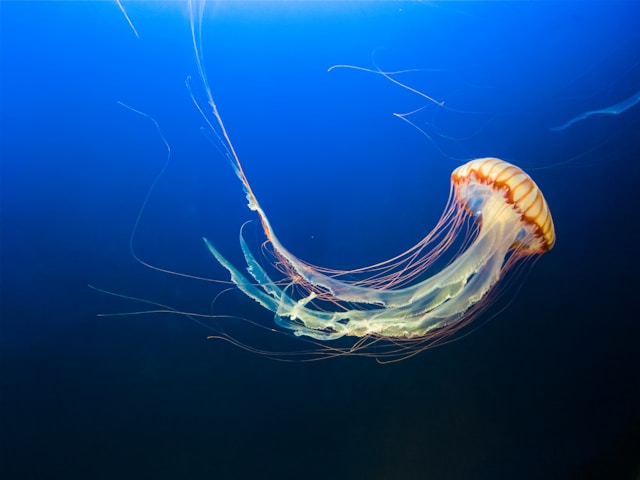
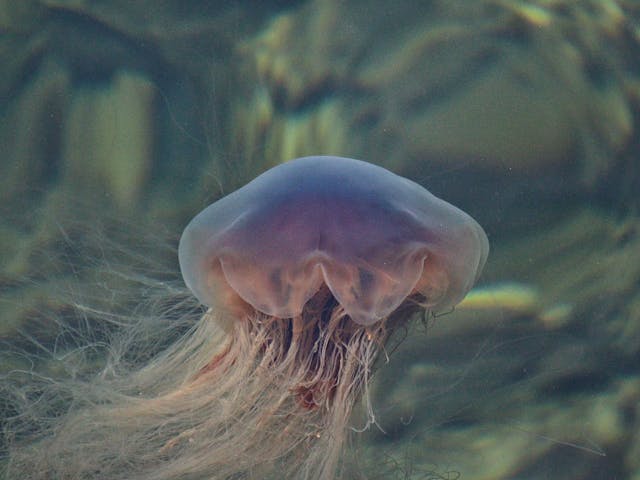
The lion’s mane jellyfish (Cyanea capillata) is a species of large scyphozoan jellyfish known for its dramatic, flowing mass of tentacles that resembles a lion’s mane — hence the name. It holds the record for the world’s largest jellyfish: the largest specimen ever recorded, found in Massachusetts Bay in 1870, had a bell (body) diameter of 2.4 metres (7.9 feet) and tentacles stretching 36.6 metres (120 feet) — longer than a blue whale. Most individuals encountered by swimmers are considerably smaller, with bells of 30–90cm and tentacles of 1–4 metres, but even average specimens are impressive marine creatures. The colour of the lion’s mane jellyfish typically ranges from reddish-brown to yellow-orange to deep crimson in larger adults.
Size, Habitat, and Biology of the Lion’s Mane Jellyfish
The lion’s mane jellyfish is predominantly found in the cold waters of the Arctic Ocean, the North Atlantic (particularly the British Isles, Scandinavia, and the northeastern United States), and the North Pacific. It is less common in warmer tropical or subtropical waters. As an adult, it drifts with ocean currents, feeding on small fish, zooplankton, and other jellyfish by paralysing prey with its venomous tentacles and drawing them to its mouth through muscular pulsing of its bell. The tentacles are organised into eight clusters of up to 150 tentacles each — totalling over 1,200 individual tentacles in large specimens. Its lifespan is typically one year, with individuals growing rapidly in spring and summer then dying off in autumn.
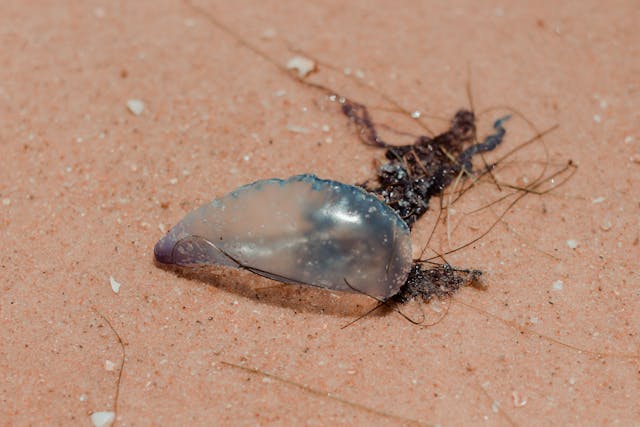
💡 Did You Know? Dead lion’s mane jellyfish washed onto beaches can still sting — their nematocysts (stinging cells) remain active even after the animal has died. This is why beachgoers should never touch a jellyfish on the sand, regardless of whether it appears dead. Children and pets are at particular risk of accidental contact with washed-up specimens.
The Lion’s Mane Jellyfish Sting: What to Expect
How the Sting Works
The lion’s mane jellyfish stings through thousands of tiny nematocysts — specialised cells in the tentacles that contain coiled, barbed threads loaded with venom. When triggered by contact, these cells fire the barb into the skin in under a millisecond, injecting venom that causes the burning, stinging sensation. The venom contains proteins that trigger inflammation and activate pain receptors. Multiple tentacles contacting skin simultaneously means multiple thousands of nematocysts firing at once — which is why even a brief brush with a tentacle can cause intense discomfort.
Sting Symptoms
Symptoms of a lion’s mane jellyfish sting typically include: immediate burning pain and itching at the contact site; raised red welts or rash in a characteristic pattern matching the tentacle contact; potential blistering in severe cases; and occasionally systemic symptoms in sensitive individuals including nausea, headache, muscle cramps, and breathing difficulty. The sting is rarely life-threatening but is painful and can cause significant discomfort lasting hours to days. People with allergies or hypersensitivity reactions may experience more severe responses.
How to Treat a Lion’s Mane Jellyfish Sting
The correct first aid for a lion’s mane jellyfish sting is important — some common advice (like urinating on the sting) is not only ineffective but can worsen the reaction. Step 1: Exit the water immediately to prevent further exposure. Step 2: Do NOT rub the area — rubbing triggers more nematocysts to fire. Step 3: Remove any visible tentacle fragments using a credit card, plastic card, or gloved fingers — never bare hands. Step 4: Rinse with seawater, not fresh water — fresh water changes the osmotic environment and triggers unfired nematocysts to discharge. Step 5: Immerse the affected area in hot water (as hot as comfortably tolerable, approximately 45°C) for 20 minutes — heat denatures the venom proteins and provides pain relief. Step 6: Oral antihistamines and topical hydrocortisone cream can help reduce the inflammatory response and itching. Step 7: Seek medical care for widespread stings, severe pain, systemic symptoms, or any sign of allergic reaction.
Lion’s Mane Jellyfish vs Lion’s Mane Mushroom — Important Distinction
Many people searching for lion’s mane jellyfish are actually looking for information about lion’s mane mushroom (Hericium erinaceus) — a completely different organism with entirely different properties. Lion’s mane mushroom is an edible fungus used in East Asian cuisine and studied for its potential neurological and cognitive benefits through compounds called hericenones and erinacines that may stimulate nerve growth factor (NGF) production. It is taken as a supplement for brain health, focus, and mood support. It has absolutely nothing in common with the jellyfish except the visual resemblance in their names — one is a marine invertebrate that stings, the other is a forest mushroom that supports brain health. For information on lion’s mane mushroom benefits, see our Natural Remedies section.
How to Stay Safe From Lion’s Mane Jellyfish at the Beach
To reduce your risk of a lion’s mane jellyfish encounter: check local beach warning flags and jellyfish reports before entering the water; avoid swimming in areas where jellyfish have been recently reported in high concentrations; wear a full wetsuit or rash guard if swimming in known lion’s mane waters (covering skin significantly reduces sting surface area); never touch jellyfish on the beach regardless of whether they appear dead; and keep children away from jellyfish washed ashore. Lion’s mane jellyfish are more prevalent in late summer and autumn in UK and northeast US waters, and in spring in Scandinavian waters, as warming surface waters bring them inshore. Awareness of seasonal patterns in your swimming area is the best preventive strategy. For broader natural health and first aid guidance, explore our Wellness Tips section.
When to Seek Medical Care After a Lion’s Mane Sting
Seek emergency medical care for a lion’s mane jellyfish sting if you experience: difficulty breathing or swallowing; chest pain or palpitations; severe nausea or vomiting; widespread swelling or hives beyond the sting site; loss of consciousness or severe dizziness; or a known severe allergy to jellyfish stings. See a doctor (non-emergency) if: the pain is severe and not responding to hot water and over-the-counter pain relief; blistering is significant; the sting covers a large area of the body; a child or elderly person has been stung; or symptoms are not improving after 24 hours. Anaphylactic reactions to jellyfish stings are rare but do occur in sensitised individuals — if in doubt, seek medical assessment promptly.
🪼 The lion’s mane jellyfish is awe-inspiring — and deserves respectful distance.
If stung: exit the water, don’t rub, remove tentacles with a card, rinse with seawater, apply heat, and seek medical care for any severe symptoms. And remember — lion’s mane mushroom supplements are a completely separate topic!
Disclaimer: This article is for educational and informational purposes only. If you experience severe symptoms following a jellyfish sting, seek emergency medical care immediately.