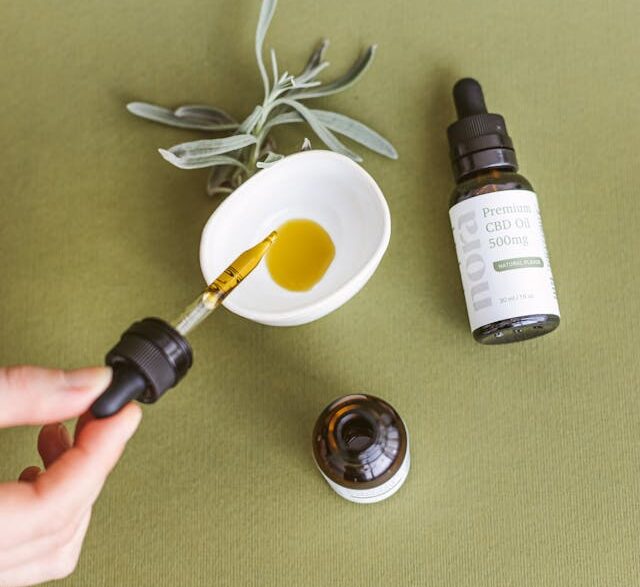
⚡ TL;DR — CBD Drops vs CBD Oil
- CBD drops and CBD oil are the same product — different names for the same format. Both refer to a liquid CBD extract in a carrier oil, dispensed with a dropper.
- The terms are used interchangeably by brands — there is no meaningful difference in how they work, what they contain, or how you use them.
- What does matter: spectrum type (full, broad, isolate), CBD concentration, carrier oil quality, and third-party testing — not what the label calls it.
- Water-soluble CBD drops are an exception — these are genuinely different from standard oil-based drops and offer higher bioavailability.
If you’ve been searching for the difference between CBD drops and CBD oil, you’re not alone — and you’re not wrong to ask. The CBD market uses these terms in confusingly inconsistent ways, and for anyone trying to make an informed buying decision, the inconsistency is genuinely unhelpful. The short answer: in the vast majority of cases, CBD drops and CBD oil are exactly the same thing. But there are some nuances worth understanding — including one genuinely meaningful distinction around water-soluble drops — and this guide covers all of it clearly.

📋 Table of Contents
- Are CBD Drops and CBD Oil the Same Thing?
- Why Do Brands Use Different Names?
- The One Real Difference: Water-Soluble CBD Drops
- What Actually Matters When Choosing CBD Drops or Oil
- How to Use CBD Drops or CBD Oil
- CBD Drops Dosage Guide
- Common Misconceptions
- Which Should You Choose?
- When to Seek Professional Help
Are CBD Drops and CBD Oil the Same Thing?
Yes — in almost all cases, CBD drops and CBD oil refer to the same product: a liquid preparation of cannabidiol extract dissolved in a carrier oil (most commonly MCT oil derived from coconut, hemp seed oil, or olive oil), dispensed using a dropper bottle. You take both the same way — sublingually, by holding drops under your tongue — and they produce the same effects.
The term “drops” simply refers to the fact that the product is administered in drops from a dropper. “Oil” refers to the oil-based formulation. Neither term tells you anything meaningful about the product’s quality, spectrum type, potency, or efficacy. A brand that calls their product “CBD drops” has made a marketing choice, not a formulation choice. The same is true of CBD tinctures — another synonym used interchangeably with drops and oil in most contexts.
Why Do Brands Use Different Names?
The proliferation of names for the same basic product comes from a few sources. First, early CBD brands borrowed terminology from the herbal supplement industry, where “tinctures” traditionally referred to alcohol-based extracts and “drops” referred to liquid extracts generally — terms that stuck even as formulations evolved. Second, regulatory environment: in some countries and US states, “CBD oil” triggers specific regulatory scrutiny, so some brands use “CBD drops” or “CBD tincture” to position differently. Third, pure marketing differentiation — brands use different names to stand out on search and in stores, even when the underlying product is identical.
The practical implication: when you’re shopping for CBD drops or CBD oil, treat these as completely interchangeable terms and focus entirely on the product specifications — spectrum type, CBD concentration, carrier oil, and third-party testing — rather than the name on the label.
💡 Did You Know? Traditional herbal tinctures are typically alcohol-based (the alcohol acts as the solvent and preservative). Most modern CBD products labelled as “tinctures” or “drops” are actually oil-based — not true tinctures in the traditional sense. A few brands do produce genuine alcohol-based CBD tinctures, which have a different absorption profile and are not the same as oil-based drops.
The One Real Difference: Water-Soluble CBD Drops
There is one genuinely meaningful distinction in the CBD drops category: water-soluble CBD drops are a different formulation from standard oil-based drops, and the difference matters.
Standard CBD oil drops are oil-based — CBD is fat-soluble, meaning it dissolves in oil but not in water. This creates a bioavailability challenge: when you take CBD oil sublingually, your body absorbs it through the mucous membrane, but the oil-water boundary in your bloodstream limits absorption to roughly 20–35% when taken sublingually (and just 6–15% when swallowed without sublingual absorption).
Water-soluble CBD drops use nanotechnology or liposomal encapsulation to break CBD molecules into much smaller particles that can mix with water and absorb directly through water-based tissues. The result is significantly higher bioavailability — some studies suggest up to 4–5 times higher than standard oil-based drops. Water-soluble CBD drops also have a faster onset (typically 10–20 minutes versus 15–30 for sublingual oil) and can be mixed into water or beverages without separating.
| Feature | Standard CBD Oil Drops | Water-Soluble CBD Drops |
|---|---|---|
| Formulation | CBD in carrier oil (MCT, hemp seed) | Nano-emulsified or liposomal CBD |
| Bioavailability | ~20–35% (sublingual) | ~40–80% (estimated) |
| Onset time | 15–30 minutes | 10–20 minutes |
| Duration | 4–6 hours | 3–5 hours (faster clearance) |
| Can mix with water | No — separates | Yes — mixes fully |
| Price | Lower | Higher (more complex manufacturing) |
| Best for | Most uses — the standard format | People who want higher bioavailability or prefer to add to drinks |
Water-soluble drops cost more and may have a slightly shorter duration than oil-based products, but for people who want maximum absorption from each dose — or who struggle with the taste of oil — they are a genuinely superior option. If a product is labelled “water-soluble,” “nano CBD,” or “nanoemulsion drops,” this is a real formulation distinction worth paying attention to.
What Actually Matters When Choosing CBD Drops or Oil
Since the name tells you almost nothing, here are the five things that actually determine whether your CBD drops or CBD oil will work for you:
1. Spectrum Type
Full-spectrum drops contain CBD plus trace THC, terpenes, and all other hemp cannabinoids — this produces the strongest effects via the entourage effect and is the best choice for most users. Broad-spectrum removes the THC while retaining other compounds. Isolate is pure CBD with nothing else — narrower effects, no entourage effect. For most wellness applications (anxiety, sleep, pain), full-spectrum or broad-spectrum outperforms isolate significantly.
2. CBD Concentration
The milligrams of CBD per ml of oil determines how potent each drop is. A 1000 mg/30ml bottle contains ~33 mg/ml. A 3000 mg/30ml bottle contains ~100 mg/ml. If you need a high daily dose (50–100 mg) for chronic pain, a low-concentration product will mean taking large volumes of oil to reach your dose — a higher-concentration product is more practical.
3. Carrier Oil
MCT oil (from coconut) is the most bioavailable carrier and has no flavour of its own. Hemp seed oil has a pleasant nutty flavour but slightly lower bioavailability. Olive oil is common in European products and adds a distinctive taste. Avoid products using cheap carrier oils like soybean or canola, or those with synthetic additives.
4. Third-Party Testing
An independent Certificate of Analysis (COA) is the only way to verify that CBD drops actually contain what the label claims — both in terms of CBD content and absence of pesticides, heavy metals, and residual solvents. Never buy CBD drops without checking the COA. For a complete guide to verifying CBD quality, see our Best CBD Oil guide.
5. Flavouring
Natural flavouring (mint, citrus, berry) is fine and makes daily use more pleasant. Artificial flavours and sweeteners are worth avoiding, particularly for people who are health-conscious about their supplement ingredients. Unflavoured “natural” CBD oil has an earthy, slightly bitter hemp taste that most people grow accustomed to within a few days.
How to Use CBD Drops or CBD Oil
The method is identical for both CBD drops and CBD oil:
- Fill the dropper to your target dose — most droppers hold 1 ml. Check the label to calculate how many mg of CBD are in 1 ml for your specific product.
- Place the drops under your tongue — not on top of the tongue or swallowed directly.
- Hold for 60 seconds — this allows absorption through the mucous membrane directly into the bloodstream, bypassing first-pass liver metabolism.
- Swallow the remainder — any CBD not absorbed sublingually will then be processed digestively.
- Take consistently — at the same time each day. Sublingual CBD has an onset of 15–30 minutes and lasts 4–6 hours. For around-the-clock benefit, take morning and evening doses.
For water-soluble CBD drops specifically: these can be placed under the tongue in the same way, or added to water, tea, or any non-fatty beverage. They fully dissolve and remain in suspension — standard oil drops will separate in water and are not suitable for this purpose.
CBD Drops Dosage Guide
Dosing CBD drops is the same process as dosing any CBD oil. The key variable is your goal:
| Goal | Daily Dose Range | Timing |
|---|---|---|
| General wellness | 10–25 mg/day | Morning or evening |
| Anxiety | 25–75 mg/day | Morning, with optional extra dose before stressors |
| Sleep | 25–75 mg | 45–60 minutes before bed |
| Chronic pain | 50–150 mg/day | Split AM and PM |
| First-time user | Start at 10–15 mg/day | Any time — build gradually |
If using water-soluble drops, note that higher bioavailability means you may need a lower mg dose to achieve the same effect as standard oil. Start at 50–60% of the standard oil dose and adjust based on your response. For the complete framework for finding your personal dose, see our CBD Dosage Guide.
Common Misconceptions About CBD Drops vs CBD Oil
“CBD drops are weaker than CBD oil.” Not true in any inherent sense. Both terms describe the same format. A “CBD drops” product with 3000 mg per bottle is stronger than a “CBD oil” with 500 mg per bottle. Potency depends on the mg content, not the name.
“CBD tinctures are different from CBD oil drops.” In the traditional sense, tinctures are alcohol-based — but most CBD products labelled as “tinctures” are actually oil-based, making them identical to CBD drops and CBD oil. True alcohol-based CBD tinctures exist (and have some advantages for people who don’t tolerate MCT oil), but they are the exception, not the rule. Check the ingredients list to see what the base/carrier actually is.
“Water-soluble drops are just a gimmick.” The improved bioavailability of water-soluble CBD is supported by research into nano-emulsification and liposomal delivery systems — these are genuine pharmaceutical technologies used across the supplement and drug delivery industry. The caveat is that the higher bioavailability means you may need a smaller dose and the effects may feel slightly different in timing and duration. They’re not a gimmick, but they’re not necessary for most users either — standard oil drops work well for the majority of people when taken sublingually correctly.
Which Should You Choose?
Here’s the simple decision framework for choosing between CBD drops and CBD oil (recognising they’re usually identical) or choosing water-soluble drops:
- For most people, most goals: Any well-made, third-party tested, full-spectrum or broad-spectrum CBD oil or drops. Name doesn’t matter. Focus on quality markers.
- For maximum bioavailability: Water-soluble CBD drops — worth the higher price if you want the most from each milligram or if standard oil hasn’t worked well for you.
- For adding to food or drinks: Water-soluble drops only. Standard oil drops will pool on top of any water-based liquid.
- For strict no-THC requirements: Broad-spectrum or isolate CBD drops — verify THC is below detectable limits on the COA.
- For anxiety, sleep, or pain: Full-spectrum CBD oil or drops at an adequate dose — not isolate, which performs significantly weaker for these conditions.
For a complete breakdown of what makes a quality CBD product — regardless of what it’s called — see our Best CBD Oil buyer’s guide. And for an in-depth look at how CBD compares to other hemp cannabinoids like CBG, see our CBG Oil Benefits vs CBD Oil Benefits guide.
When to Seek Professional Help
Whether you’re using CBD drops, CBD oil, or any other CBD format, the same general safety considerations apply. If you take prescription medications — particularly blood thinners, antidepressants, anti-epileptics, or sedatives — speak with your doctor before starting CBD. CBD interacts with the CYP450 liver enzyme system and can affect drug metabolism in ways that require medical oversight.
If you’re pregnant, breastfeeding, or under 18, avoid CBD products unless specifically advised by a healthcare provider. The FDA’s guidance on CBD is worth reading before starting any CBD regimen. And if you’re using CBD to manage a significant health condition — chronic pain, an anxiety disorder, sleep disorder — do so in collaboration with a qualified healthcare professional rather than as a standalone treatment.
🌿 CBD drops or CBD oil? The name is the least important thing.
Focus on spectrum type, concentration, carrier oil, and third-party testing — those are the variables that determine whether your CBD works. If you want higher bioavailability or to mix CBD into beverages, look for water-soluble drops. Otherwise, any well-made full-spectrum or broad-spectrum product will serve you well — whatever it says on the label.
Disclaimer: This article is for educational purposes only and has not been evaluated by the FDA. CBD products are not intended to diagnose, treat, cure, or prevent any disease. Always consult a qualified healthcare professional before starting any new supplement regimen.