⚡ TL;DR — Sun Poisoning
- “Sun poisoning” isn’t real poisoning and isn’t an official diagnosis — it’s the everyday name for a severe sun reaction that makes you feel ill, not just burned.
- The tell-tale sign is whole-body symptoms: fever, chills, nausea, headache, dizziness, and dehydration on top of the burn.
- Most cases settle at home with cooling, steady rehydration, rest, and an anti-inflammatory pain reliever. Don’t pop blisters.
- Get urgent care for confusion, a high fever, widespread blistering, fainting, or signs of serious dehydration.
Last updated: May 2026
You spent the day outside, went to bed thinking you’d just caught too much sun, and woke up feeling genuinely unwell — hot, headachy, queasy, maybe shivering. That’s usually the moment people start searching for sun poisoning. The name sounds alarming, and the confusion around it is real: there’s no toxin involved and no antidote to take. What the phrase actually describes is a sunburn severe enough that your body’s inflammatory response stops staying in your skin and starts affecting the rest of you. This guide explains what’s really happening, how to recognise it, what to do at home, and the specific signs that mean it’s time to call a doctor.
⚕️ Medical Disclaimer: This article is for informational purposes only and does not constitute medical advice. Always consult a qualified healthcare professional before making changes to your health routine, and seek emergency care for severe symptoms after sun exposure.

What Is Sun Poisoning?
There’s no diagnosis code for sun poisoning — doctors don’t use the term clinically. It’s a popular label for one of a few different UV reactions, and the Cleveland Clinic notes it’s most often just a severe sunburn that leaves you feeling sick, sometimes called “sun sickness.” The “poisoning” part is misleading: nothing toxic has entered your body. What’s happened is that UV light has damaged a large area of skin, and your immune system’s response to that damage has spilled over into the rest of your body. Less commonly, people use the same phrase for a genuine sun allergy such as polymorphous light eruption (PMLE), which produces an itchy, bumpy rash rather than a classic burn — a distinct reaction we cover in our guide to the sun poisoning rash and PMLE.
Why Sun Poisoning Happens
When intense UV radiation hits the skin for a long stretch, it damages the DNA inside skin cells and sets off a cascade of inflammation. The familiar redness, heat, and pain of a burn come from that local response. When the burned area is large enough, the reaction goes systemic: your body can run a fever, lose a surprising amount of fluid through the damaged skin barrier, and respond with the nausea, headache, and bone-tired fatigue people describe. As the Cleveland Clinic points out, a lot of how unwell you feel comes down to dehydration from the burn rather than the burn itself. Several things raise the odds of a severe reaction — fair skin, high altitude, reflective surfaces like water, sand, and snow, photosensitising medications, and long stretches outdoors without shade or reapplied sunscreen.
💡 Did You Know? Sunburn is far from rare. A 2026 CDC report estimated that about 88.1 million U.S. adults — roughly 35% — had at least one sunburn in the previous year, and that 55% of the most recent sunburns happened despite using sunscreen. Sunscreen alone, applied thinly or too rarely, often isn’t enough.
Sun Poisoning Symptoms
On the skin
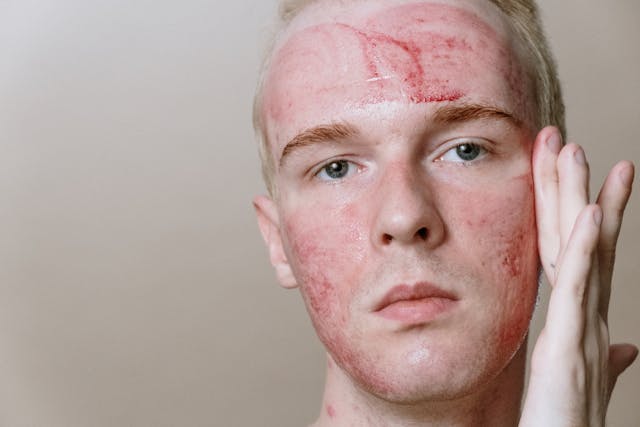
The skin signs are essentially a sunburn turned up to severe: deep redness and pain across large areas, noticeable swelling, and — the big one — blistering, which marks a second-degree burn. The skin stays hot and tender for days and eventually peels as it sheds the damaged layer. Widespread blistering is the clearest signal that you’re past ordinary sunburn and need to take wound care seriously to avoid infection.
Through the whole body
The symptoms that set this apart from a normal burn are the systemic ones: fever and chills, nausea or vomiting, a pounding headache, dizziness, weakness, and a fast pulse from fluid loss. In serious cases, confusion or disorientation can appear — a red flag for dangerous dehydration or overheating that needs urgent attention. A simple rule of thumb: if you feel sick and not just burned, treat it as the more serious end of the spectrum.
Sun Poisoning Treatment at Home
For mild to moderate cases, home care comes down to cooling, fluids, and calming the inflammation. Get out of the sun straight away and into a cool space. Use cool — not ice-cold — compresses on burned skin for 10 to 15 minutes at a time, or take a cool shower; ice can injure already-fragile skin. Drink steadily: water plus an electrolyte source such as an oral rehydration solution or coconut water, because the damaged skin is leaking fluid faster than you’d think. An over-the-counter anti-inflammatory like ibuprofen helps with pain and swelling (avoid aspirin in children). Plain aloe vera gel soothes; numbing sprays with benzocaine or lidocaine are best skipped, since they can irritate broken skin. Harvard Health also advises against putting hydrocortisone on raw, open skin and warns not to break blisters — if one bursts on its own, keep it clean and covered. Wear loose clothing and stay out of the sun until you’ve fully recovered.
Sun Poisoning vs Sunburn
The line between the two is whether your body stays local or goes systemic. An ordinary sunburn lives on the skin — red, sore, peeling — and usually clears within three to five days. The more severe reaction adds fever, nausea, chills, dizziness, and dehydration, and tends to take longer to settle. Any blistering, a fever, or feeling genuinely unwell tips you out of “just a burn” territory and into something to manage more carefully. We break the whole comparison down side by side in our guide to sun poisoning vs sunburn.
How to Prevent Sun Poisoning
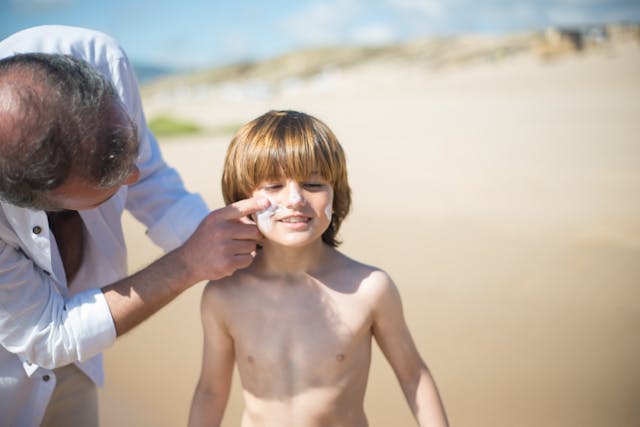
Prevention is mostly about layering your defences rather than relying on any single one. Use a broad-spectrum SPF 30 or higher, apply it about 15 minutes before going out, and — the step most people skip — reapply every two hours and after swimming or sweating. Cover up with UPF-rated clothing, a wide-brimmed hat, and UV-blocking sunglasses; fabric is more reliable than sunscreen you forget to top up. Try to avoid direct midday sun between 10am and 4pm, seek shade often, and keep your fluids up in hot weather. If you take photosensitising medications — some antibiotics such as doxycycline, certain diuretics, retinoids, or some acne treatments — you can burn far faster than usual, so be extra cautious and ask your pharmacist if you’re unsure. For more seasonal skin and wellness guidance, browse our Wellness Tips section.
When to See a Doctor
Seek emergency care if you notice confusion or disorientation, a fever above 39°C/102°F, blistering across large areas, fainting, a racing or irregular heartbeat, trouble breathing, or signs of serious dehydration such as not urinating for many hours. Book a same-day, non-emergency visit for blisters that need proper dressing, symptoms that aren’t improving after two to three days of home care, nausea that won’t let you keep fluids down, or anything more than mild symptoms in a young child or older adult. In a clinic, more severe cases may be treated with IV fluids for dehydration, oral steroids to calm heavy inflammation, dressings for blistered skin, or antihistamines if there’s an allergic component. When in doubt, the Cleveland Clinic’s sun poisoning overview is a sound, current reference — but if you feel very unwell, get seen rather than waiting it out.
☀️ Sun poisoning is serious — but almost entirely preventable.
SPF 30+ reapplied every two hours, shade in the middle of the day, and steady hydration go a long way. If you do get caught out: cool down, drink up, rest, and keep an eye out for the whole-body symptoms that mean it’s time to get help.
✍️ About the Author
Written by the Blooming Vitality Editorial Team. We research every health topic against current, reputable sources — including the CDC, Cleveland Clinic, and Harvard Health — and write in plain language to help you make informed decisions. This article is educational and is not a substitute for personalised medical advice.