
⚡ TL;DR — CBD Oil Benefits
- The most well-evidenced CBD oil benefits include anxiety relief, improved sleep, chronic pain reduction, and anti-inflammatory effects — all supported by clinical research.
- CBD works through multiple pathways — serotonin receptors, the endocannabinoid system, and GABA receptors — giving it a broader therapeutic profile than most single-target supplements.
- The FDA has approved one CBD-based drug (Epidiolex) for epilepsy — making CBD the only cannabinoid with full regulatory approval.
- Benefits typically take 2–4 weeks of consistent daily use to become fully apparent — patience and correct dosing matter more than product choice.
CBD oil benefits are one of the most searched topics in natural wellness — and also one of the most misunderstood. On one end of the spectrum, overzealous marketing claims CBD can cure everything from cancer to the common cold. On the other, sceptics dismiss it entirely as a wellness fad. The truth sits firmly in between: CBD oil has a genuinely impressive and growing evidence base for several specific conditions, modest evidence for others, and limited evidence for the rest. This guide cuts through the noise and gives you the honest, science-grounded picture of what CBD oil actually does — and what to expect from it.
📋 Table of Contents
- How CBD Oil Works in the Body
- Benefit 1: Anxiety and Stress Relief
- Benefit 2: Improved Sleep Quality
- Benefit 3: Chronic Pain Relief
- Benefit 4: Anti-Inflammatory Effects
- Benefit 5: Neuroprotection and Brain Health
- Other Emerging CBD Oil Benefits
- Common Misconceptions
- How to Use CBD Oil to Get the Benefits
- When to Seek Professional Help
How CBD Oil Works in the Body
To understand CBD oil benefits, you first need to understand how CBD (cannabidiol) actually interacts with the body — because it’s not a simple on/off switch. CBD works through multiple overlapping mechanisms simultaneously, which is why its therapeutic profile is broader than most single-compound supplements.
The primary mechanism is CBD’s interaction with the endocannabinoid system (ECS) — a regulatory network of receptors (CB1 and CB2) and signalling molecules that governs mood, sleep, pain, immune response, and inflammation. CBD doesn’t bind directly to these receptors the way THC does. Instead, it inhibits the enzyme FAAH, which normally breaks down anandamide — your body’s naturally produced “bliss molecule.” More anandamide circulating means more natural calm, pain modulation, and emotional balance.
Beyond the ECS, CBD also activates 5-HT1A serotonin receptors (relevant to anxiety and mood), modulates TRPV1 receptors (involved in pain and temperature), engages GABA-A receptors at higher doses (relevant to sleep and relaxation), and has antioxidant properties that support cellular health. This multi-target profile is what gives CBD oil its range of documented benefits.
💡 Did You Know? In 2018, the FDA approved Epidiolex — a pharmaceutical-grade CBD product — for treating two rare forms of childhood epilepsy (Dravet syndrome and Lennox-Gastaut syndrome). This makes CBD the only cannabinoid with full FDA drug approval, providing the strongest possible regulatory validation of its therapeutic effects.
Benefit 1: Anxiety and Stress Relief
Anxiety relief is the most widely researched and most consistently supported of all CBD oil benefits. CBD’s action at 5-HT1A serotonin receptors — the same receptors targeted by SSRI antidepressants — produces a reliable calming effect without the side effects of pharmaceutical anxiolytics. A landmark 2019 study in The Permanente Journal found that 79% of adults with anxiety reported meaningful improvement after one month of daily CBD at 25–75 mg. A 2011 Brazilian trial showed 400 mg CBD significantly reduced anxiety and physiological stress markers in social anxiety disorder patients during a simulated public speaking test.
What distinguishes this CBD oil benefit from pharmaceutical alternatives is its safety profile: no dependency risk, no withdrawal syndrome, and no cognitive blunting at therapeutic doses. For daily anxiety management, 25–50 mg is the typical effective range; for acute situational anxiety (before a high-stress event), a single larger dose of 50–100 mg taken 60 minutes prior is a well-documented approach. For a full breakdown of dosing strategies, see our CBD Oil for Anxiety guide.
Benefit 2: Improved Sleep Quality
The sleep-related CBD oil benefits are closely tied to its anxiety-relieving effects — but extend beyond them. CBD reduces cortisol secretion at night (cortisol is the stress hormone that keeps the brain alert), modulates the sleep-wake cycle through the ECS, and at higher doses (above 150 mg) appears to have mild direct sedative properties. The same 2019 Permanente Journal study found 66% of participants reported improved sleep after one month of CBD use.
Crucially, CBD’s sleep benefit is qualitative, not just quantitative. Unlike benzodiazepines or z-drugs (Ambien, Zopiclone), which suppress REM and deep sleep, CBD appears to preserve — and may even enhance — slow-wave sleep: the most physically restorative stage. This means users typically wake feeling genuinely refreshed rather than groggy. For a complete guide to CBD sleep dosing and product selection, see our CBD for Sleep guide.

Benefit 3: Chronic Pain Relief
Pain relief is one of the most practically significant CBD oil benefits and has a solid preclinical and growing clinical evidence base. CBD modulates pain through multiple pathways: it engages TRPV1 receptors (involved in heat and pain perception), reduces neuroinflammation (a key driver of nerve pain), and suppresses inflammatory signalling in peripheral tissues. A 2018 review in the Journal of Pain Research concluded that CBD’s pain-modulating effects are dose-dependent — meaning you may need higher doses to adequately address significant chronic pain.
In practice, CBD oil benefits for pain are most consistently reported for neuropathic pain (nerve damage), inflammatory pain (arthritis, joint pain), and musculoskeletal pain (back pain, muscle soreness). Typical effective doses for chronic pain range from 50–150 mg daily, often split into two doses. Topical CBD (creams and balms applied directly to affected joints or muscles) can complement oral CBD for localised pain — it won’t enter the bloodstream but provides targeted anti-inflammatory relief to the application site.
Benefit 4: Anti-Inflammatory Effects
Chronic low-grade inflammation underlies many of the most prevalent modern health conditions — from cardiovascular disease and metabolic syndrome to autoimmune conditions and accelerated ageing. The anti-inflammatory CBD oil benefits operate through several mechanisms: CBD suppresses pro-inflammatory cytokine production, reduces oxidative stress, and modulates the NF-κB pathway — one of the central molecular switches of the inflammatory response.
Research published in the Journal of Clinical Investigation found CBD significantly reduced sebaceous gland inflammation (relevant to acne and skin conditions). Preclinical research has shown CBD suppresses inflammatory markers in models of IBD, arthritis, and neuroinflammation. While human clinical trials on CBD specifically for inflammation are still limited, the mechanistic evidence is strong — and CBD is already widely used as a complementary anti-inflammatory supplement by people with arthritis, autoimmune conditions, and exercise-related inflammation.
Benefit 5: Neuroprotection and Brain Health
One of the most exciting emerging CBD oil benefits is its neuroprotective potential. CBD reduces oxidative stress in brain tissue, suppresses neuroinflammation, and has been shown to support neurogenesis (the growth of new neurons) in the hippocampus — a brain region central to memory and emotional regulation. This is the mechanism behind the FDA-approved use of CBD for epilepsy: CBD’s anticonvulsant properties are neuroprotective in nature.
Beyond epilepsy, research is exploring CBD’s role in neurodegenerative conditions including Alzheimer’s disease (where neuroinflammation is a key driver of progression), Parkinson’s disease, and multiple sclerosis. A 2020 review in Frontiers in Pharmacology highlighted CBD’s ability to reduce amyloid-beta plaque accumulation — a hallmark of Alzheimer’s — in preclinical models. These findings are preliminary, but they position CBD as one of the most pharmacologically interesting natural compounds for long-term brain health.

Other Emerging CBD Oil Benefits
Beyond the five core areas above, research is actively exploring several other potential CBD oil benefits:
| Potential Benefit | Evidence Level | Key Finding |
|---|---|---|
| Skin health / acne | Moderate (clinical + lab) | CBD reduces sebum production and skin inflammation |
| Heart health | Preliminary (lab + animal) | CBD reduces resting blood pressure; cardioprotective in stress models |
| Addiction support | Early clinical | CBD may reduce cravings for opioids, cigarettes, and alcohol |
| Gut health | Preclinical | CBD reduces gut motility and inflammation in IBS/IBD models |
| Mood / depression | Preclinical + emerging | CBD boosts serotonin signalling; antidepressant-like effects in animal models |
| Diabetes prevention | Preclinical | CBD reduces inflammation and oxidative stress associated with type 1 diabetes |
It’s worth noting that “emerging” and “preclinical” don’t mean “disproven” — they mean the research is promising but human trials haven’t yet confirmed the findings at scale. For conditions in this category, CBD should be considered a complement to, not a replacement for, established medical care.
Common Misconceptions About CBD Oil Benefits
“CBD oil cures diseases.” CBD is not a cure for any disease. It is a supplement with documented therapeutic effects for specific conditions. Claims that it cures cancer, diabetes, or autoimmune diseases are not supported by current evidence and often represent dangerous misinformation that can lead people to delay legitimate medical care.
“You feel CBD oil benefits immediately.” For most conditions — especially anxiety and sleep — the full benefits of CBD emerge after 2–4 weeks of consistent daily use. The endocannabinoid system adapts gradually to supplementation. Expecting instant results and giving up after a few days is the most common reason people conclude CBD doesn’t work for them.
“Any CBD product will give you the same benefits.” Quality varies dramatically in the CBD market. A mislabelled, low-potency, or contaminated product will produce little or no benefit regardless of how consistently you take it. Third-party tested, accurately labelled CBD oil from transparent brands is the non-negotiable baseline for experiencing real CBD oil benefits. For guidance on choosing quality, see our Best CBD Oil buyer’s guide.
How to Use CBD Oil to Get the Benefits
Getting the most from CBD oil benefits comes down to three things: the right product, the right dose, and consistency.
- Choose full-spectrum or broad-spectrum: The entourage effect — the synergistic interaction of CBD with other hemp compounds — significantly amplifies CBD’s benefits over isolate alone. Full-spectrum is the most effective; broad-spectrum is second best for those avoiding THC.
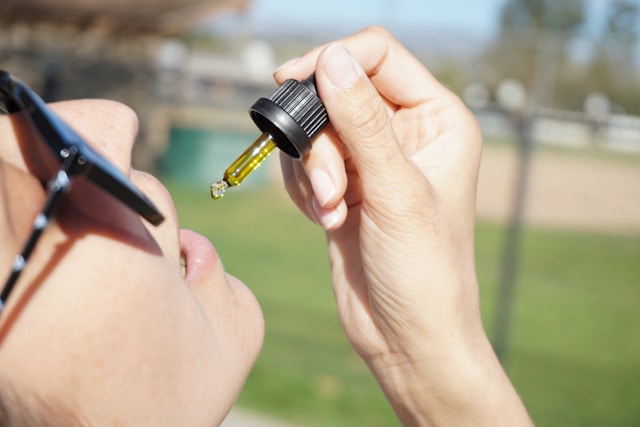
- Take sublingually: Hold oil under your tongue for 60 seconds before swallowing. This bypasses first-pass liver metabolism and gives ~20–35% bioavailability — significantly more than swallowing it directly or using it in food.
- Start low, titrate up: Begin at 15–25 mg daily and increase by 10 mg every 5–7 days until you notice benefits. Most people find their effective dose between 25–75 mg daily.
- Be consistent: Take CBD at the same time each day. The endocannabinoid system responds to sustained supplementation — sporadic dosing produces unreliable results.
- Give it time: Assess your results after 4 weeks of consistent use before deciding whether to adjust the dose or product type.
For a complete dosing guide by condition, see our CBD Dosage Guide: How Much CBD Oil Should I Take? For context on how CBD benefits compare to other hemp cannabinoids, see our CBG Oil Benefits vs CBD Oil Benefits comparison.
When to Seek Professional Help
While CBD oil benefits are real and meaningful for many conditions, CBD is a complement to — not a replacement for — professional medical care. If you are managing chronic pain, a diagnosed anxiety disorder, a sleep disorder, or any neurological or inflammatory condition, please work with a qualified healthcare provider rather than self-treating with CBD alone.
CBD interacts with the liver’s CYP450 enzyme system and can affect the metabolism of certain prescription medications — particularly blood thinners, antidepressants, anti-epileptics, and immunosuppressants. Always discuss CBD use with your doctor if you take any prescription medication. The World Health Organization recognises CBD as generally safe with a favourable profile, but individual responses and drug interactions require professional oversight.
🌿 The bottom line on CBD oil benefits?
The evidence is real, the mechanisms are well-understood, and millions of people are experiencing meaningful improvements in anxiety, sleep, pain, and inflammation. The key is choosing a quality product, using the right dose for your goal, and giving it enough time to work. CBD isn’t a miracle — but it is a genuinely impressive natural supplement when used correctly.
Disclaimer: This article is for educational purposes only and has not been evaluated by the FDA. CBD products are not intended to diagnose, treat, cure, or prevent any disease. Always consult a qualified healthcare professional before starting any new supplement regimen.