⚡ TL;DR — Best CBD Oil
- The best CBD oil is always third-party tested, accurately labelled, and matched to your specific wellness goal — not just the most expensive or most marketed.
- Full-spectrum CBD oil is the most effective for anxiety, sleep, and pain; broad-spectrum is ideal if you need to avoid THC entirely.
- The five non-negotiable quality markers are: a Certificate of Analysis (COA), hemp source transparency, CO2 extraction, accurate cannabinoid labelling, and clean carrier oils.
- Most people need 25–75 mg/day to feel meaningful results — significantly above what most product labels suggest as a “serving.”
Finding the best CBD oil in a market flooded with thousands of products — many with misleading labels, inflated claims, and inconsistent quality — is genuinely difficult. The CBD industry remains largely self-regulated, meaning companies can make broad wellness claims without rigorous scrutiny. The result: well-made, effective CBD oils share shelf space with underdosed, contaminated, or mislabelled products, and the average buyer can’t tell them apart. This guide cuts through the noise with a clear, science-informed framework for identifying the best CBD oil for your needs — whatever those needs are.

📋 Table of Contents
What Makes the Best CBD Oil?
The best CBD oil isn’t defined by price, brand fame, or bottle design. It’s defined by three things: quality (what’s actually in the bottle matches what’s on the label), safety (no contaminants), and fit (it’s the right type and potency for your goal). An expensive, award-winning CBD oil that’s a poor fit for your specific wellness need is a worse choice than a mid-priced, third-party tested product that matches what you actually need.
Quality and safety are objective — they can be verified via lab reports. Fit is personal — it requires understanding the three main types of CBD oil and which wellness goals each serves best.
Full-Spectrum vs Broad-Spectrum vs Isolate: Which Is Best?
This is the single most impactful decision you make when choosing the best CBD oil for your needs. Here’s an honest breakdown:
Full-Spectrum CBD Oil
Full-spectrum CBD oil contains the complete range of hemp’s naturally occurring compounds: cannabinoids (CBD, CBG, CBN, CBC, and trace THC below 0.3%), terpenes (aromatic compounds with their own therapeutic properties), and flavonoids. This combination produces the “entourage effect” — a well-documented phenomenon where multiple hemp compounds amplify each other’s therapeutic effects beyond what any single compound can achieve alone.
Full-spectrum CBD oil is generally considered the most effective option for anxiety, sleep, pain, and general wellness. The trace THC is not enough to produce any psychoactive effect but contributes meaningfully to the overall therapeutic profile. It is the best choice for most users — unless you are regularly drug tested or have a medical reason to avoid THC entirely.
Broad-Spectrum CBD Oil
Broad-spectrum CBD oil retains the full range of hemp’s terpenes and minor cannabinoids, but has the THC removed to non-detectable levels through additional processing. This preserves much of the entourage effect while eliminating THC — making it the best choice for people who are drug tested, who have THC sensitivity, or who work in contexts where any THC content is prohibited. The trade-off is a slightly reduced therapeutic profile compared to full-spectrum, but for most users this difference is minor.
CBD Isolate Oil
CBD isolate is pure cannabidiol, with all other hemp compounds removed. It’s the cleanest option from a formulation standpoint and the least expensive per milligram — but it also loses the entourage effect entirely. Research suggests that CBD isolate follows a different dose-response curve than full-spectrum products: the therapeutic window is narrower, and higher doses don’t always produce better results. For most wellness applications, isolate is the weakest option — but it’s suitable for users who want zero chance of any THC exposure or who are very sensitive to terpenes.
💡 Did You Know? A 2019 study in the European Journal of Pain found that full-spectrum CBD produced significantly better pain relief outcomes than CBD isolate at the same dose — providing strong evidence for the entourage effect as a real, clinically meaningful phenomenon.
5 Non-Negotiable Quality Markers for the Best CBD Oil
These are the criteria that separate genuinely high-quality CBD oil from the vast majority of mediocre or misrepresented products. Never purchase a CBD oil that fails any of these five checks:
1. Third-Party Certificate of Analysis (COA)
The COA is the most important document in CBD quality verification. It must come from an independent, accredited laboratory — not the brand’s own testing facility. A full-panel COA should confirm: cannabinoid potency (does the bottle contain what the label claims?), pesticide residue testing, heavy metal testing, residual solvent testing, and microbial contamination testing. If a brand doesn’t publish COAs or makes them difficult to find, disqualify that product immediately. The best CBD oil brands publish batch-specific COAs accessible via QR code on packaging.
2. Transparent Hemp Sourcing
Hemp is a bioaccumulator — it absorbs whatever is in the soil it’s grown in, including heavy metals, pesticides, and industrial pollutants. The best CBD oil brands are explicit about where their hemp is grown: the US (particularly Colorado, Kentucky, and Oregon, which have robust agricultural oversight), or the EU (particularly Switzerland, which has the strictest hemp regulations in the world). Brands that cannot tell you where their hemp is grown are a red flag.
3. CO2 Extraction Method
The extraction method determines whether the final product is clean and potent. CO2 extraction is the gold standard: it uses pressurised carbon dioxide (not chemical solvents) to extract cannabinoids and terpenes from hemp, producing a pure extract without residual solvents. Solvent-based extraction (using ethanol or propane) is acceptable when followed by thorough solvent removal (confirmed on the COA), but CO2 remains the preferred method for the best CBD oil. Avoid brands that use “proprietary extraction” without specifying the method — this is usually a red flag.
4. Accurate Cannabinoid Labelling
A 2019 Penn State University study tested 80 commercially available CBD products and found that 70% were inaccurately labelled — some significantly under or over their stated CBD content. This is precisely why the COA matters: it lets you independently verify that a bottle claiming “1000 mg CBD” actually contains close to that amount. The best CBD oil brands consistently test within 10% of their label claims. Significant deviations (especially under-dosing) indicate poor quality control or deliberate mislabelling.
5. Clean Carrier Oil
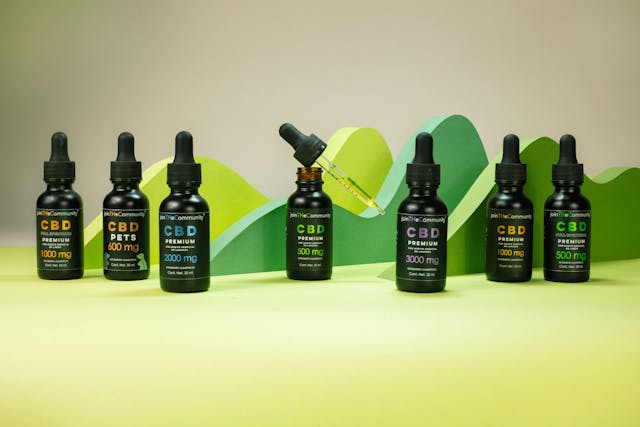
CBD must be dissolved in a carrier oil for bioavailability and palatability. The best CBD oil uses MCT oil (medium-chain triglyceride oil, derived from coconut), hemp seed oil, or avocado oil — all of which are neutral in flavour, well-absorbed, and nutritionally beneficial. Avoid CBD oils that use cheap carrier oils like soybean oil, canola oil, or mineral oil, or that include unnecessary synthetic additives or artificial flavouring agents.
Best CBD Oil by Wellness Goal
Beyond quality, the best CBD oil depends on what you’re using it for. Here’s a goal-specific breakdown:
| Wellness Goal | Best CBD Type | Potency Range | Suggested Dose |
|---|---|---|---|
| Anxiety | Full-spectrum | 1000–3000 mg/bottle | 25–75 mg/day |
| Sleep | Full-spectrum or Broad-spectrum | 1500–3000 mg/bottle | 50–100 mg before bed |
| Chronic Pain | Full-spectrum | 2000–5000 mg/bottle | 50–150 mg/day |
| General Wellness | Broad-spectrum or Full-spectrum | 500–1500 mg/bottle | 10–25 mg/day |
| Drug-Tested Individual | Broad-spectrum | Any | Start low (15 mg) |
| First-Time User | Broad-spectrum | 500–1000 mg/bottle | 10–25 mg/day |
For detailed dosing guidance across specific conditions, see our complete CBD Dosage Guide: How Much CBD Oil Should I Take?
Red Flags to Avoid When Choosing the Best CBD Oil
As important as knowing what to look for in the best CBD oil is knowing what to avoid. Here are the most common quality and safety warning signs:
- No COA or COA from brand’s own lab: This is the single most important disqualifier. An independent third-party COA is non-negotiable.
- Miracle cure language: Any CBD brand that claims its product “cures,” “treats,” or “prevents” specific diseases is violating FDA guidelines and making claims the science doesn’t support. The best CBD oil brands use careful, evidence-informed language.
- Price that seems too low: High-quality CBD extraction, third-party testing, and clean ingredients cost money. A 1000 mg CBD oil priced below $20 is almost certainly either mislabelled, poorly extracted, or using low-quality hemp.
- Vague hemp sourcing: “Organically grown hemp” without specifying the country or state of origin is a meaningless claim. Demand specifics.
- Undated COAs: COAs should be batch-specific and recent. A COA more than 12 months old doesn’t tell you what’s in the current batch — hemp extract degrades over time and batches vary.
A Real-World Buying Example: How to Choose the Best CBD Oil
David, 52, was looking for the best CBD oil for chronic lower back pain that was disrupting his sleep. He’d been overwhelmed by the number of options online. Using the framework above, here’s how he narrowed his search:
First, he identified his goal: pain relief + sleep. This pointed him to full-spectrum CBD oil at a higher potency (2000–3000 mg per bottle). Second, he looked up COAs for three shortlisted brands — one brand’s COA was undated and from its own lab (eliminated), one had pesticide residue above threshold levels (eliminated), and one had a clean full-panel COA from an accredited third-party lab (selected). Third, he checked the carrier oil: MCT oil, sourced from organic coconut — acceptable. Fourth, he noted the hemp was grown in Colorado under the state’s agricultural hemp program — transparent sourcing.
He started at 50 mg nightly, increased to 75 mg after 10 days, and by week three reported meaningfully reduced pain and uninterrupted sleep for the first time in over a year. The framework worked — not because he found a “magic” product, but because he eliminated the poor-quality options and found a genuinely well-made one that was right for his goal. For a comparison of how CBD oil compares to other hemp supplements, see our guide on CBG Oil Benefits vs CBD Oil Benefits.
Common Misconceptions About Best CBD Oil
“The most expensive CBD oil is the best CBD oil.” Price correlates with quality only up to a point. Beyond that, you’re often paying for branding, marketing, and packaging. A mid-priced brand with an impeccable COA and transparent sourcing often outperforms a premium-priced competitor with lesser transparency.
“Higher mg always means stronger effects.” Milligrams per bottle matters — but only in conjunction with the actual dose per serving and the bioavailability of the product. A 3000 mg full-spectrum oil taken sublingually is more effective than a 5000 mg isolate taken as a gummy. The form, spectrum type, and extraction quality all affect real-world effectiveness.
“CBD oil labelled ‘organic’ is automatically safe.” “Organic” on a CBD label can refer to the hemp, the carrier oil, or neither — the term is used loosely in the hemp industry. The only reliable safety verification is the full-panel third-party COA. Always go to the lab report, not the marketing claim.

Building a Daily Routine Around Best CBD Oil
Once you’ve identified the best CBD oil for your goal, consistency is everything. The endocannabinoid system responds to regular supplementation — the benefits of CBD accumulate over weeks, not days. A simple, sustainable daily structure:
- Week 1–2: Start at the lower end of your target dose range. Take at the same time each day (morning for anxiety/general wellness; evening for sleep/pain).
- Week 3: Assess your response. If improvement is minimal, increase by 10–15 mg.
- Week 4 onwards: Stay at your effective dose. Track consistency — the most common failure mode is taking CBD inconsistently and then concluding it doesn’t work.
Always take sublingual CBD oil by holding it under your tongue for at least 60 seconds before swallowing — this maximises absorption through the mucosal membrane and gives you the fastest, most efficient delivery. For more context on how CBD oil fits into a broader hemp supplement routine, read our guide on How to Use CBG and CBD Together.
When to Seek Professional Help
Even the best CBD oil has limitations. If you’re using CBD to manage a serious or worsening health condition — chronic pain, anxiety disorder, insomnia, or a neurological condition — please do so in partnership with a qualified healthcare provider. CBD can be an excellent complementary tool, but it should not replace diagnosis, monitoring, or treatment for conditions that require medical management.
If you take prescription medications, check drug interactions before starting CBD. The FDA provides guidance on CBD safety considerations that is worth reviewing before starting any CBD regimen. CBD is broadly safe — but it’s safest when used with awareness and appropriate professional oversight.
🌿 Ready to find the best CBD oil for your needs?
Use the five quality markers as your non-negotiable checklist, choose the spectrum type that fits your goal, and start at a dose that gives your body room to respond. The best CBD oil is the one that’s made with integrity, matched to your wellness need, and taken consistently enough to work.
Disclaimer: The information in this article is for educational purposes only and has not been evaluated by the FDA. CBD products are not intended to diagnose, treat, cure, or prevent any disease. Always consult a qualified healthcare professional before starting any new supplement regimen.