💚 TL;DR
- Mediterranean diet recipes are built around extra-virgin olive oil, fresh vegetables, legumes, whole grains, oily fish, and herbs — not complicated techniques or hard-to-find ingredients.
- The Mediterranean diet has been rated the #1 best overall diet by U.S. News & World Report for eight consecutive years, praised for heart health, longevity, and ease of adherence.
- You don’t need to overhaul your kitchen — swapping seed oils for extra-virgin olive oil, adding more legumes, and building meals around vegetables are the three most impactful starting points.
- This guide gives you 10 complete, beginner-friendly mediterranean diet recipes covering breakfast, lunch, and dinner — all based on authentic Mediterranean principles.
Mediterranean diet recipes are some of the most searched health food terms right now — and for good reason. This is not a restrictive diet built around cutting things out. It is a whole-food lifestyle that has been eaten across Greece, Italy, Spain, Lebanon, and North Africa for generations.
The science is clear. U.S. News & World Report has ranked the Mediterranean diet the #1 best overall diet for eight consecutive years. It is consistently associated with reduced cardiovascular disease risk, better blood sugar control, improved longevity, and lower rates of cognitive decline.
Whether you are completely new to this way of eating or looking for fresh inspiration, these 10 mediterranean diet recipes give you everything you need — full ingredients, simple methods, and the nutritional reasoning behind each dish.
⚕️ Medical Disclaimer: This article is for informational purposes only and does not constitute nutritional or medical advice. If you have a health condition requiring a specific diet, please consult a registered dietitian or your doctor.
Last updated: May 2026
What Makes a Recipe Mediterranean?
A mediterranean diet recipe is not defined by a single country or cuisine. It is defined by principles — a way of selecting and combining ingredients that reflects the traditional eating patterns of countries bordering the Mediterranean Sea.
The core principles are: abundant plant-based foods (vegetables, fruits, legumes, whole grains, nuts, seeds); extra-virgin olive oil as the primary fat; fish and seafood at least twice a week; moderate amounts of poultry, eggs, and dairy; very limited red meat; and fresh herbs and spices rather than heavy sauces for flavour.
What you eat less of is just as important. Processed foods, refined grains, added sugars, and industrial seed oils dominate the modern Western diet — and their absence is a big part of what makes mediterranean diet recipes so powerful for long-term health.
💡 Did You Know? The anti-inflammatory benefits of Mediterranean eating come from the combination of polyphenols in extra-virgin olive oil, omega-3s in oily fish, and fibre from legumes and vegetables — not any single superfood. The power is in the pattern. According to the World Health Organization’s healthy diet guidance, diets rich in fruits, vegetables, legumes, and unsaturated fats are the strongest foundations for preventing non-communicable diseases. Our article on turmeric and black pepper explores how natural anti-inflammatory compounds work synergistically — the same principle underpins Mediterranean eating.
Health Benefits of Mediterranean Diet Recipes
Before diving into the recipes themselves, it is worth understanding why mediterranean diet recipes are worth making a habit. The evidence base here is among the strongest in nutritional science.
Heart health: The landmark PREDIMED trial, published in the New England Journal of Medicine, followed over 7,400 participants and found that a Mediterranean diet supplemented with extra-virgin olive oil or nuts reduced the risk of major cardiovascular events — heart attack, stroke, or death — by approximately 30% compared to a low-fat control diet.
Longevity: The Mediterranean diet is a consistent feature of so-called ‘Blue Zones’ — regions of the world with the highest concentrations of people aged 100 and over. Ikaria in Greece and Sardinia in Italy both follow dietary patterns that closely match mediterranean diet recipes built around legumes, olive oil, seasonal vegetables, and fish.
Blood sugar and weight: According to NHS guidance on the Mediterranean diet, this way of eating is one of the recommended dietary approaches for people with or at risk of type 2 diabetes, due to its emphasis on fibre-rich foods, healthy fats, and low refined carbohydrate intake.
Brain health: A 2025 review published in PubMed found that adherence to a Mediterranean dietary pattern was associated with slower cognitive decline and reduced risk of Alzheimer’s disease in older adults, attributed largely to the anti-inflammatory and antioxidant-rich profile of mediterranean diet recipes.
Mediterranean Pantry Essentials
Before getting into the mediterranean diet recipes below, stock these staples. With them on hand, you can make almost any dish from scratch in under 30 minutes.
Oils and condiments: extra-virgin olive oil (EVOO), red wine vinegar, lemon juice, dijon mustard.
Pulses and grains: tinned chickpeas, tinned lentils, cannellini beans, whole grain couscous, farro, wholemeal pitta.
Tinned goods: tinned tomatoes, tinned tuna in olive oil, tinned sardines, sundried tomatoes in oil.
Herbs and spices: dried oregano, cumin, smoked paprika, cinnamon, ground coriander, za’atar, sumac.
Dairy: Greek yoghurt, feta cheese, halloumi, parmesan.
Nuts and seeds: almonds, walnuts, pine nuts, sesame seeds.
Mediterranean Diet Recipes: Breakfast
Recipe 1 — Greek Yoghurt with Honey, Walnuts and Berries
Why it’s Mediterranean: Full-fat Greek yoghurt provides protein and probiotics. Walnuts add healthy fats and polyphenols. Berries deliver antioxidants. A drizzle of raw honey adds natural sweetness without refined sugar.
Ingredients (1 serving): 200g full-fat Greek yoghurt, 1 tbsp raw honey, a small handful of walnuts, a handful of mixed berries (fresh or thawed from frozen).
Method: Spoon yoghurt into a bowl. Top with berries and walnuts. Drizzle honey over the top. Eat immediately. That’s it — 5 minutes, zero cooking, and one of the most nutritionally dense mediterranean diet recipes for breakfast.
Nutrition note: This breakfast provides approximately 25g protein, 4g fibre, and meaningful amounts of calcium, B12, and omega-3s.
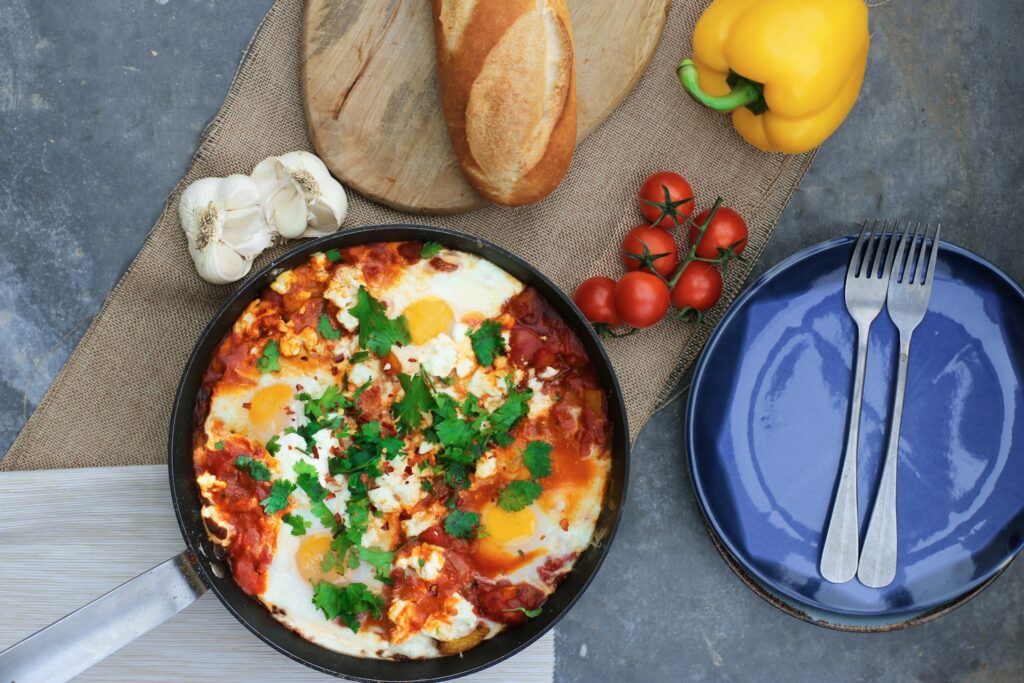
Recipe 2 — Shakshuka (Eggs in Spiced Tomato Sauce)
Why it’s Mediterranean: Shakshuka is a beloved dish from Tunisia, Israel, and across the Levant. It is egg-based, plant-forward, and built entirely on pantry staples that sit at the heart of mediterranean diet recipes.
Ingredients (2 servings): 2 tbsp extra-virgin olive oil, 1 onion (diced), 2 garlic cloves (minced), 1 red pepper (sliced), 1 tsp smoked paprika, 1 tsp cumin, ½ tsp chilli flakes, 1 x 400g tin chopped tomatoes, 4 large eggs, fresh parsley, salt and pepper.
Method: Heat oil in a wide pan over medium heat. Sauté onion for 5 minutes until soft. Add garlic, pepper, and spices — cook 2 more minutes. Pour in tomatoes, season, simmer 8–10 minutes until sauce thickens. Make 4 wells in the sauce. Crack an egg into each. Cover and cook 5–6 minutes until whites are set but yolks still runny. Scatter parsley over the top. Serve straight from the pan with wholemeal pitta.
Make it ahead: Make the tomato base the night before. Reheat and add eggs fresh in the morning.
Mediterranean Diet Recipes: Lunch
Recipe 3 — Classic Greek Salad
Why it’s Mediterranean: The simplest expression of Mediterranean eating — raw vegetables, good olive oil, quality cheese, and nothing processed. One of the most iconic mediterranean diet recipes in existence.
Ingredients (2 servings): 4 large ripe tomatoes (roughly chopped), 1 cucumber (roughly chopped), 1 red onion (thinly sliced), 1 green pepper (roughly chopped), 16 kalamata olives, 150g feta cheese (in one block), 3 tbsp extra-virgin olive oil, 1 tbsp red wine vinegar, 1 tsp dried oregano, salt and pepper.
Method: Combine vegetables and olives in a bowl. Drizzle oil and vinegar over the top. Season with oregano, salt, and pepper. Place the feta block on top rather than crumbling it — the traditional Greek way. Serve immediately.
Tip: Use the ripest, best-quality tomatoes you can find. The quality of ingredients is everything in Mediterranean cooking.
Recipe 4 — Lemon Chickpea and Spinach Soup
Why it’s Mediterranean: Legume-based soups are a cornerstone of mediterranean diet recipes. This one is high in plant protein, fibre, and iron — and takes under 20 minutes start to finish.
Ingredients (4 servings): 3 tbsp extra-virgin olive oil, 1 onion (diced), 3 garlic cloves (minced), 1 tsp cumin, 1 tsp smoked paprika, 2 x 400g tins chickpeas (drained), 800ml vegetable stock, 150g baby spinach, juice of 1 large lemon, salt, pepper, fresh parsley to serve.
Method: Sauté onion in oil for 5 minutes. Add garlic and spices, cook 1 minute. Add chickpeas and stock. Bring to a boil, then simmer 10 minutes. Using a hand blender, briefly blitz half the soup to create a thick, creamy base while leaving some whole chickpeas for texture. Stir in spinach (it will wilt in 2 minutes) and lemon juice. Season and serve with olive-oil-drizzled bread.
Recipe 5 — Tuna, White Bean and Herb Salad
Why it’s Mediterranean: This five-minute assembly is built entirely from pantry staples and delivers excellent protein, omega-3s, and fibre — a classic example of how mediterranean diet recipes make healthy eating genuinely easy.
Ingredients (2 servings): 2 x 145g tins tuna in olive oil (drained), 1 x 400g tin cannellini beans (drained and rinsed), ½ red onion (finely diced), 2 tbsp capers, a large handful of fresh parsley (chopped), 3 tbsp extra-virgin olive oil, juice of 1 lemon, salt and pepper.
Method: Combine tuna, beans, onion, capers, and parsley in a bowl. Dress with olive oil and lemon juice. Season well. Eat as is, or serve over rocket leaves or wholegrain toast.
Recipe 6 — Hummus Bowl with Roasted Vegetables
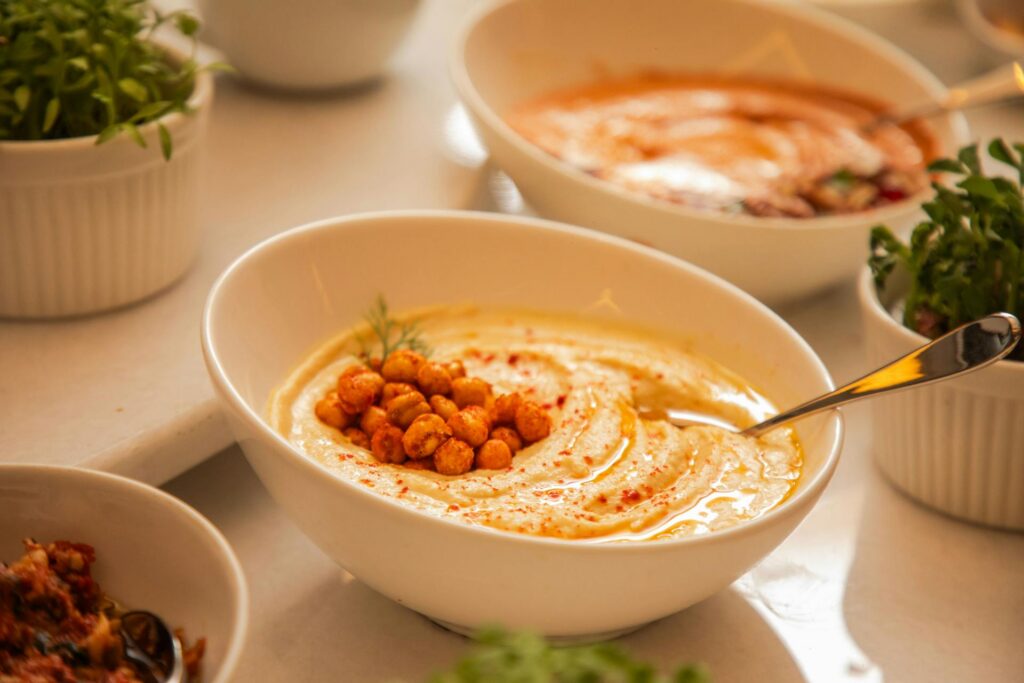
Why it’s Mediterranean: Hummus — made from chickpeas, tahini, olive oil, and lemon — is one of the most protein-dense dips in any cuisine. Combined with roasted vegetables, it is a complete and satisfying lunch at the heart of everyday mediterranean diet recipes.
Ingredients (2 servings): 400g ready-made or homemade hummus, 1 courgette (sliced), 1 red pepper (sliced), 1 aubergine (cubed), 3 tbsp extra-virgin olive oil, 1 tsp za’atar or dried oregano, salt, pepper, wholemeal pitta to serve.
Method: Preheat oven to 200°C. Toss vegetables in olive oil, za’atar, salt, and pepper. Roast 20–25 minutes until golden and slightly charred. Spread hummus generously in a wide bowl. Pile roasted vegetables on top. Drizzle extra olive oil. Serve with warm pitta.
Mediterranean Diet Recipes: Dinner
Recipe 7 — Lemon Herb Baked Salmon
Why it’s Mediterranean: Oily fish is the most important protein in mediterranean diet recipes. Salmon provides omega-3 fatty acids (EPA and DHA), which are strongly linked to reduced cardiovascular disease risk and anti-inflammatory effects throughout the body.
Ingredients (2 servings): 2 salmon fillets (skin on), 3 tbsp extra-virgin olive oil, juice and zest of 1 lemon, 3 garlic cloves (minced), 2 tbsp fresh dill or parsley, 1 tsp dried oregano, salt and pepper.
Method: Preheat oven to 200°C. Mix oil, lemon, garlic, herbs, salt, and pepper. Lay salmon skin-side down in a baking dish. Pour marinade over. Bake 12–15 minutes until fish flakes easily. Serve with a simple green salad and whole grain couscous.
Recipe 8 — Greek Sheet Pan Chicken with Vegetables
Why it’s Mediterranean: One-pan cooking with chicken, vegetables, and olive oil is the backbone of Greek home cooking — and one of the most practical formats for mediterranean diet recipes on a busy weeknight.
Ingredients (4 servings): 8 bone-in, skin-on chicken thighs, 2 courgettes (thickly sliced), 1 red onion (quartered), 1 punnet cherry tomatoes, 300g green olives, 4 garlic cloves (whole, unpeeled), 4 tbsp extra-virgin olive oil, 1 tsp dried oregano, 1 tsp smoked paprika, juice of 1 lemon, salt and pepper.
Method: Preheat oven to 210°C. Combine everything in a large roasting tin. Toss to coat. Arrange chicken on top of vegetables, skin-side up. Roast 40–45 minutes until skin is golden and crisp and juices run clear. Squeeze roasted garlic cloves over the top before serving.
Recipe 9 — Lentil and Spinach Stew with Cumin and Lemon
Why it’s Mediterranean: Lentils are one of the most important legumes in mediterranean diet recipes — extremely high in fibre, protein, and iron, and deeply satisfying. This stew is fully plant-based and one of the most nutritionally complete dishes in this guide.
Ingredients (4 servings): 3 tbsp extra-virgin olive oil, 1 large onion (diced), 4 garlic cloves (minced), 1 tsp cumin, 1 tsp coriander, ½ tsp turmeric, 300g green or brown lentils (rinsed), 1 x 400g tin chopped tomatoes, 1 litre vegetable stock, 200g baby spinach, juice of 2 lemons, salt and pepper.
Method: Sauté onion in oil 7 minutes. Add garlic and spices, cook 2 minutes. Add lentils, tomatoes, and stock. Bring to boil, then simmer 25–30 minutes until lentils are completely tender. Stir in spinach and lemon juice. Season generously. Serve drizzled with more olive oil and a wedge of lemon.
Meal prep note: This stew keeps in the fridge for 4 days and freezes perfectly. Make a big batch and use across the week.
Recipe 10 — Prawn and Feta Saganaki
Why it’s Mediterranean: Saganaki — named after the small two-handled pan it is traditionally cooked in — is a classic Greek taverna dish and a standout among mediterranean diet recipes for seafood lovers. Prawns and feta in a rich tomato sauce, ready in 20 minutes.
Ingredients (2 servings): 3 tbsp extra-virgin olive oil, 3 garlic cloves (minced), 1 tsp chilli flakes, 1 x 400g tin chopped tomatoes, 300g raw king prawns (peeled), 100g feta cheese (crumbled), fresh parsley, salt and pepper.
Method: Heat oil in a wide pan. Gently sauté garlic and chilli 1 minute. Add tomatoes, season, simmer 8–10 minutes. Add prawns — they cook in 3–4 minutes until pink and curled. Scatter feta and parsley over the top. Serve straight from the pan with crusty bread.
Tips for Sticking to Mediterranean Eating
The best mediterranean diet recipes work because they are enjoyable and sustainable — not because they demand willpower. These practical principles help make it a habit rather than a project.
Switch your oil first. Replace your cooking oil with extra-virgin olive oil across all meals. This single swap delivers measurable cardiovascular benefit and sets the nutritional foundation of the diet.
Eat fish twice a week as a minimum. Salmon, sardines, mackerel, sea bass, and trout are all excellent choices. Tinned sardines in olive oil are one of the most nutrient-dense foods at any price point.
Make legumes your default protein. Chickpeas, lentils, cannellini beans, and butter beans are cheap, fast, and incredibly versatile. Aim for at least 4–5 servings per week.
Build every plate around vegetables. Mediterranean cooking treats vegetables as the centrepiece — not a side dish. Aim for half your plate to be vegetables at both lunch and dinner.
Use herbs instead of heavy sauces. Oregano, parsley, mint, dill, thyme, and basil add enormous flavour without calories or additives. Za’atar, sumac, and harissa transform simple mediterranean diet recipes instantly.
Common Mediterranean Diet Misconceptions
“The Mediterranean diet means eating pasta every day”
Pasta features in Italian mediterranean diet recipes, but it is eaten in modest portions and as part of a varied diet. Across Greece, the Levant, and North Africa, legumes and fish are far more central than pasta or bread.
“It’s expensive to eat this way”
This is one of the most persistent myths about mediterranean diet recipes. Tinned chickpeas, lentils, sardines, frozen vegetables, and dried whole grains are among the cheapest foods available. Extra-virgin olive oil costs more upfront but is used in small quantities and delivers far more nutritional value per tablespoon than cheap seed oils.
“You need to drink wine to follow it”
Wine appears as a moderate feature of traditional Mediterranean cultures, but it is absolutely not required. The health benefits of mediterranean diet recipes come entirely from the food pattern — not from alcohol. Alcohol carries its own health risks that outweigh any potential benefit for many people.
Frequently Asked Questions
What are the best foods for mediterranean diet recipes?
The foundation foods are extra-virgin olive oil, oily fish (salmon, sardines, mackerel, anchovies), legumes (chickpeas, lentils, cannellini beans), vegetables of all types, whole grains (farro, whole grain couscous, barley), nuts and seeds, Greek yoghurt, feta cheese, and fresh herbs. These form the majority of all authentic mediterranean diet recipes, with poultry and eggs in moderation and red meat only occasionally. The Harvard School of Public Health Mediterranean diet overview is an excellent reference for the full evidence base.
Can I lose weight on the Mediterranean diet?
Yes — though mediterranean diet recipes are not designed primarily for weight loss. Because this pattern is built around high-fibre, high-protein, nutrient-dense whole foods, most people naturally eat less without calorie counting. Research consistently shows comparable or better weight loss than low-fat diets, with much better long-term adherence because the food is genuinely enjoyable.
Are mediterranean diet recipes good for heart health?
Yes — the evidence is exceptional. The PREDIMED trial showed a 30% reduction in cardiovascular events compared to a low-fat diet. Mediterranean diet recipes are also the default dietary recommendation from the American Heart Association for cardiovascular risk reduction, alongside the NHS and the European Society of Cardiology.
What do you eat for breakfast on the Mediterranean diet?
Common Mediterranean breakfast mediterranean diet recipes include Greek yoghurt with fruit, nuts, and honey; eggs cooked in olive oil with vegetables; shakshuka; whole grain toast with hummus or labneh; and fresh fruit with nuts. Traditional Mediterranean cultures often eat a lighter breakfast and make lunch the largest meal of the day.
🌿 The Best Diet in the World — and the Most Delicious
Mediterranean diet recipes are not about restriction or perfection. They are about filling your plate with colour, flavour, and food that genuinely nourishes you. Start with one recipe this week. Build from there. The evidence is clear — and so is the enjoyment. 💚
✍️ About the Author
This article was written by the editorial team at Blooming Vitality, a health and wellness platform dedicated to evidence-based, practical nutrition guidance. Our content is reviewed for accuracy against current peer-reviewed research and dietary guidelines.