⚡ TL;DR — Gua Sha Routine
- A proper gua sha routine takes 5–10 minutes, 2–3 times per week, and delivers real benefits: reduced puffiness, improved circulation, sculpted contours, and better skincare absorption.
- Always apply a facial oil or serum first — never use gua sha on dry skin.
- Hold the stone at a 15–45° angle with light-to-medium pressure and always move upward and outward — never downward.
- Morning sessions reduce puffiness; evening sessions relax facial muscles and support overnight skin renewal.
A consistent gua sha routine is one of the most effective, low-cost investments you can make in your skin’s health and appearance — but the technique matters enormously. Done correctly, it drains puffiness, improves circulation, lifts and sculpts facial contours, reduces tension, and makes your skincare products work harder. Done incorrectly (on dry skin, with too much pressure, or in the wrong direction), it can irritate or even damage the delicate skin on your face. This step-by-step guide teaches you the complete gua sha routine used by estheticians — from tool selection to the final strokes.
What Is a Gua Sha Routine?
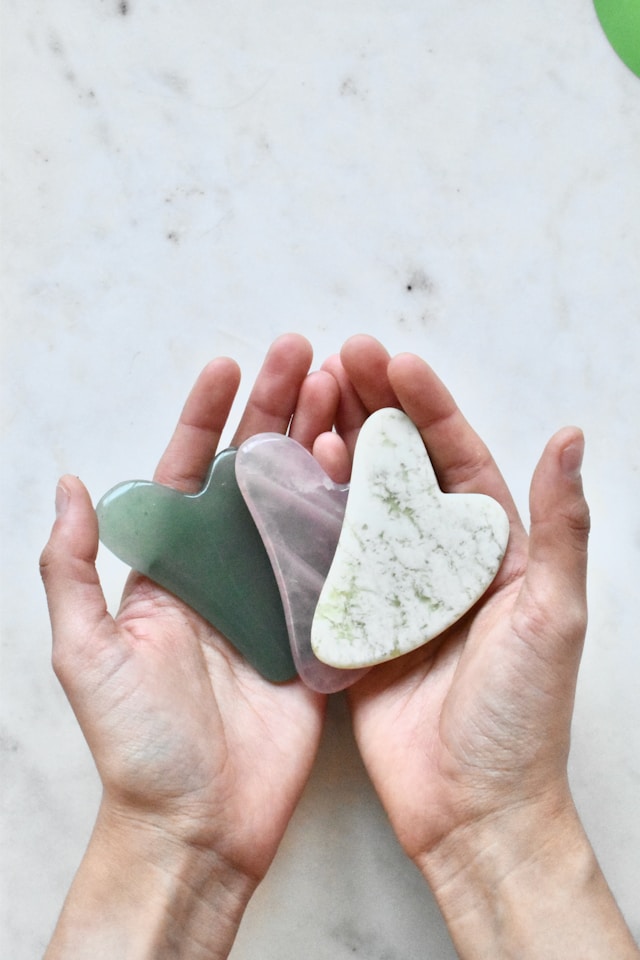
A gua sha routine is a facial massage practice using a smooth-edged stone — typically jade, rose quartz, or aventurine — to gently scrape the skin in upward and outward strokes. The technique originates in Traditional Chinese Medicine, where gua sha (meaning “scrape wind” in Chinese) was used on the body to improve circulation, reduce pain, and support healing. Modern facial gua sha adapts these principles with a much gentler touch — the goal is not to produce the petechiae (small red dots from broken capillaries) seen in therapeutic body gua sha, but to achieve the cumulative effects of improved lymphatic drainage, circulation, and muscle release through regular, mindful practice.
The Science Behind the Gua Sha Routine
The benefits of a gua sha routine have several well-supported physiological bases. Lymphatic drainage is primary — the lymphatic system has no pump of its own and relies on physical movement and massage to circulate lymph fluid. Facial gua sha mimics the directional flow of lymph (from the centre of the face toward the lymph nodes at the ears, jaw, and neck), helping drain fluid that accumulates overnight as puffiness. A 2011 clinical trial published in Pain Medicine found gua sha therapy produced significant short-term pain relief and improved range of motion for chronic neck pain — evidence for its muscle-release effects. Improved microcirculation is another mechanism: the pressure and motion of gua sha increase blood flow to the skin’s surface, delivering more oxygen and nutrients to skin cells and producing the immediate post-gua-sha glow practitioners report.
💡 Did You Know? Storing your gua sha stone in the fridge for 15 minutes before use amplifies its depuffing effect — the cool stone constricts blood vessels slightly, further reducing puffiness and inflammation. This is especially effective for a morning gua sha routine before an important day.
Step-by-Step Gua Sha Routine
Always start your gua sha routine after cleansing and applying a generous amount of facial oil, serum, or moisturiser — the stone must glide smoothly without dragging. Hold the stone at a 15–45° angle against the skin. Repeat each stroke 3–5 times per side.
Step 1: Neck and Throat (Always Start Here)
Begin at the base of your neck. Using the long edge of the stone, make upward strokes from your collarbone to your jawline on each side. Then use the double-notched (U-shaped) edge from where your collarbones meet, drawing upward along the centre of your throat to the chin. Starting here is critical — you must open the lymph drain at the neck first before working the face upward, otherwise fluid has nowhere to drain to.
Step 2: Jawline
Place the double-notched edge at the centre of your chin. Using a flat angle (as close to the skin as possible), scrape along the jawline from chin to ear in one smooth motion. This is the most sculpting step of the gua sha routine — the motion defines the jawline and drains fluid accumulated in the lower face. You can use your other hand to gently hold the skin taut at the chin for extra tension.
Step 3: Cheeks
Starting from beside the nose, use the long edge of the stone to glide upward and outward across the cheekbone toward the hairline just in front of the ear. This stroke improves circulation to the mid-face and lifts the appearance of the cheeks over time. Keep the motion smooth, even, and upward — never downward.
Step 4: Under-Eye Area
This is the most delicate part of the gua sha routine and requires the lightest pressure possible — almost no pressure at all. Use the small notch at the top of the stone (designed for the eye area). Starting from the inner corner of the eye, glide outward along the orbital bone toward the temple, then continue to the hairline. This drains puffiness and dark circles. Never press directly onto the eyeball or the soft tissue below it.
Step 5: Eyebrows
Place the double-notched edge between your brows, as flat against the skin as possible. Draw outward along the brow bone toward the temples. This relieves tension in the frontalis and corrugator muscles — the muscles responsible for forehead lines and the “11s” between the brows.
Step 6: Forehead
Use the short, flat edge of the stone to scrape from the brows upward to the hairline. Use gentle, even pressure and smooth strokes. This final upward sweep completes the lymphatic drainage direction — all fluid has now been moved upward and outward toward the lymph nodes near the temples and behind the ears, where it will drain naturally.
How to Choose Your Gua Sha Stone
The material of your gua sha stone affects both the feel and — to a degree — the cooling or warming effect on skin. Jade stays cool the longest, making it excellent for depuffing; rose quartz is gentler and more suitable for sensitive skin; aventurine has soothing properties. Stainless steel versions are effective and hygienic but lack the ritualistic quality that makes gua sha feel like genuine self-care rather than a chore. Choose a stone with a smooth, clearly designed edge — notched for the jaw and eye area, long curved for the cheeks, shorter for the forehead. Always buy from a reputable source to ensure you’re getting genuine stone rather than resin fakes. Clean your stone with mild soap after every use.
Common Gua Sha Routine Mistakes to Avoid
Using it on dry skin. This is the most important rule in any gua sha routine: never apply the stone to dry skin. The friction will drag, irritate, and potentially break capillaries. Always apply oil, serum, or moisturiser first — your skin should be slippery enough that the stone glides effortlessly.
Pressing too hard. Facial gua sha should never hurt. Light-to-medium pressure is all that’s needed. The lymphatic vessels are superficial — they sit just beneath the skin surface and require gentle pressure to stimulate, not deep pressure.
Skipping the neck. Always begin at the neck to open the lymph drainage pathway before working the face. Starting on the face without opening the neck first is like trying to drain a sink with the plug still in.
Going downward. All facial gua sha strokes should move upward and outward — following the natural flow of lymph toward the drainage nodes near the ears, neck, and collarbone. Downward strokes work against the lymphatic flow and can worsen sagging over time.
Building a Consistent Gua Sha Routine
Consistency delivers better results than intensity with gua sha. Practising your gua sha routine 2–3 times per week produces meaningful cumulative results — improved circulation, reduced puffiness, and noticeably more sculpted features — within 2–4 weeks. Morning sessions are ideal for depuffing before important events; evening sessions support overnight skin renewal and muscle relaxation. Keep your stone on your bathroom shelf or bedside table where you’ll see it as a reminder. The full routine takes 5–10 minutes once you’ve learned the strokes. See our companion guide on gua sha benefits for the research behind the results. For more wellness practices, explore our Wellness Tips section at Blooming Vitality. Both WebMD’s gua sha overview and Pai Skincare’s tutorial are excellent complementary resources.
When to Skip Your Gua Sha Routine
Avoid gua sha on skin with active breakouts, open wounds, sunburn, rosacea flares, or any skin infection. People with bleeding disorders, those taking blood thinners, or anyone prone to facial bruising should consult a dermatologist before beginning a gua sha routine. Avoid the eye area if you have any eye conditions. If you experience redness, irritation, or pain during gua sha, stop immediately — reduce pressure, ensure your skin is adequately oiled, and consider moving to every-other-day practice.
✨ Five minutes. Three times a week. That’s all a gua sha routine takes.
Start with the neck, move upward through the jaw, cheeks, eyes, brows, and forehead — always gliding on well-oiled skin. Within two weeks, you’ll see why this 2,000-year-old practice has found its place in every modern skincare routine worth having.
Disclaimer: This article is for educational purposes only. Consult a dermatologist if you have existing skin conditions before beginning a gua sha routine.