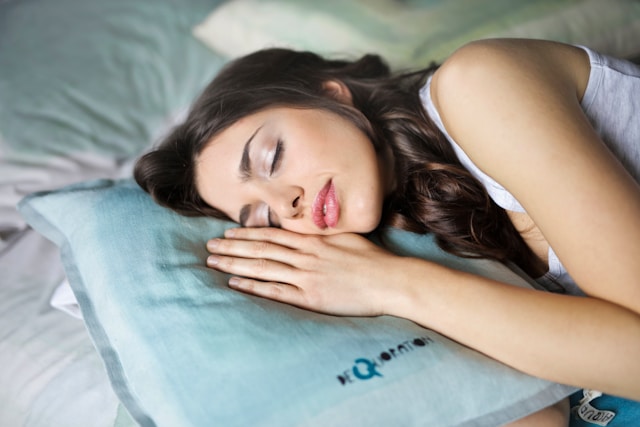
Mouth taping for sleep has become a popular wellness trend on social media. The idea is simple: place a small strip of tape over your lips before going to bed to discourage mouth breathing and encourage breathing through your nose.
Supporters claim that mouth taping can reduce snoring, improve sleep quality, prevent dry mouth and help you wake up feeling more refreshed.
But the science is more complicated.
Current research suggests that mouth taping may reduce snoring or improve certain breathing measures in some carefully selected people, particularly people who breathe through their mouths and have mild obstructive sleep apnea. However, the overall evidence remains limited, and mouth taping can be risky for people with nasal obstruction, untreated sleep apnea or certain respiratory problems.
So before putting tape over your mouth at night, it’s important to understand what the research actually shows, who should avoid it and what safer alternatives are available.
What Is Mouth Taping for Sleep?
Mouth taping is the practice of placing a strip of skin-safe adhesive tape over or across the lips while sleeping.
The goal is to encourage nasal breathing instead of mouth breathing.
Nasal breathing naturally warms, humidifies and filters the air before it reaches the lower airways. It also changes airflow resistance and can influence how the upper airway functions.
The problem is that mouth breathing can sometimes be the body’s response to an underlying problem, such as nasal congestion, allergies, a deviated septum or an obstructed airway.
Simply closing the mouth with tape doesn’t necessarily fix that underlying problem.
Does Mouth Taping Actually Help You Sleep?
There isn’t enough evidence to say that mouth taping reliably improves sleep in healthy adults.
A 2025 systematic review examined 10 studies involving oral occlusion or mouth taping in people with mouth breathing, sleep-disordered breathing or obstructive sleep apnea. The review found that some studies reported improvements in measures such as the apnea-hypopnea index, oxygen desaturation and snoring.
However, the studies were generally small and varied considerably in design. The review concluded that evidence supporting mouth taping as a general treatment for sleep-disordered breathing is insufficient and that there may be serious risks for people with nasal obstruction.
This distinction is important.
There is a difference between:
“Mouth taping might help a selected group of people.”
and:
“Everyone should tape their mouth shut to sleep better.”
The current evidence supports the first statement much more than the second.
What Does the Research Say About Mouth Taping?
One small 2022 study looked at 20 people with mild obstructive sleep apnea who were also mouth breathers.
After using a porous oral patch, the participants experienced a reduction in their median apnea-hypopnea index from 8.3 to 4.7 events per hour. Snoring measures also decreased.
Those findings are interesting, but the study was small and focused on a specific group of people with mild sleep apnea.
It doesn’t establish that mouth taping is safe or effective for everyone.
More recently, a 2025 systematic review evaluated the available research and found only 10 eligible studies, covering a relatively small number of participants. Some studies showed improvements in sleep-apnea-related measurements, while others showed little or no benefit. The researchers also identified potential risks, particularly when nasal obstruction is present.
A newer finding: mouth tape with CPAP
There is also emerging research involving people who already use CPAP for obstructive sleep apnea.
A 2025 randomized crossover study involving 62 people with OSA and mouth breathing found that silicone hypoallergenic mouth tape used during CPAP treatment increased average CPAP use by about 52 minutes per day and improved several reported symptoms.
However, this is a very different situation from using mouth tape as a standalone treatment.
The study investigated mouth tape alongside CPAP, not as a replacement for treatment.
What Are the Possible Benefits of Mouth Taping?
The evidence for most claimed benefits remains limited, but there are several reasons people are interested in mouth taping.
1. It May Reduce Mouth Breathing
The primary purpose of mouth tape is to discourage breathing through the mouth and encourage nasal breathing.
For someone who naturally breathes through their mouth at night despite having a clear nasal airway, this may change their breathing pattern.
However, persistent mouth breathing can also be a sign that something is interfering with nasal airflow.
2. It May Reduce Some Snoring
Mouth taping may reduce snoring in certain people whose snoring is associated with open-mouth breathing.
Some small studies have reported reductions in snoring after the mouth was kept closed. The 2022 study in people with mild OSA and mouth breathing, for example, found a substantial reduction in its measured snoring index.
But this doesn’t mean mouth tape is a proven treatment for chronic snoring.
Snoring can be caused by several factors, including airway anatomy and obstructive sleep apnea.
3. It May Reduce Morning Dry Mouth
If you breathe through your mouth throughout the night, you may wake up with a dry mouth or throat.
Encouraging nasal breathing could reduce the amount of air passing directly through the mouth.
However, persistent dry mouth deserves attention because it can have other causes, including medications and health conditions.
4. It May Help Some People Using CPAP
For people using CPAP who have problems with mouth breathing and mask leakage, mouth tape may have a role under appropriate medical guidance.
The 2025 randomized crossover trial found improved CPAP adherence and reductions in several symptoms when mouth tape was used in people with mouth breathing and OSA.
That doesn’t mean people with sleep apnea should independently add mouth tape to their treatment.
What About Claims of Deeper Sleep or Better Recovery?
This is where it’s important to separate theory from evidence.
You may see claims that mouth taping:
- Increases deep sleep
- Improves oxygen levels
- Boosts energy
- Improves concentration
- Increases recovery
- Improves facial structure
- Prevents aging
- Improves overall health
Many of these claims have not been adequately demonstrated in controlled human research.
The 2025 systematic review specifically concluded that evidence for mouth taping as a broad intervention for sleep-disordered breathing is limited.
Therefore, it’s better not to treat social-media claims as established medical benefits.
Is Mouth Taping Safe?
Mouth taping isn’t automatically safe for everyone.
The biggest concern is what happens if your nose becomes blocked while your mouth is taped shut.
If you can’t breathe adequately through your nose, restricting mouth breathing can make breathing difficult.
Cleveland Clinic specifically warns against mouth taping in people with conditions such as nasal obstruction, nasal congestion, chronic allergies, sinus infections and a deviated septum.
Potential problems can include:
- Difficulty breathing
- Skin irritation
- Redness or rash
- Allergic reactions to adhesive
- Anxiety or panic
- Difficulty falling asleep
- More disrupted sleep
- Worsening breathing problems in susceptible people
The 2025 systematic review also identified potential serious harm when mouth taping is used in people with nasal obstruction.
Can Mouth Taping Be Dangerous With Sleep Apnea?
This is one of the most important questions.
If you have untreated obstructive sleep apnea, you should not assume that mouth taping is a safe DIY treatment.
Sleep apnea involves repeated interruptions or reductions in breathing during sleep. Snoring, gasping, choking during sleep, witnessed pauses in breathing and excessive daytime sleepiness can be warning signs.
Mouth taping does not treat the underlying airway obstruction.
Current medical sources recommend addressing possible sleep apnea rather than using mouth tape as a substitute for diagnosis or treatment.
If you already use CPAP, the situation is different. Emerging research suggests mouth tape may help selected CPAP users with mouth breathing, but this should be discussed with a healthcare professional rather than treated as a replacement for CPAP.
Who Should Avoid Mouth Taping?
You should avoid experimenting with mouth taping without medical advice if you have:
- Untreated or suspected sleep apnea
- Significant nasal congestion
- Chronic nasal obstruction
- A deviated septum that interferes with nasal breathing
- Chronic allergies that block your nose
- A respiratory condition that affects breathing
- Difficulty breathing through your nose
- Frequent nighttime choking or gasping
- An unexplained pattern of loud snoring
Children should also not have their mouths taped during sleep without specific medical guidance.
Cleveland Clinic advises against mouth taping for people with nasal obstruction and several other conditions because forcing nasal-only breathing can create breathing difficulties.
How to Use Mouth Tape More Safely
There are currently no universally accepted medical guidelines establishing a standard method for mouth taping during sleep.
If a healthcare professional has determined that mouth taping is appropriate for you, practical precautions can reduce some avoidable risks.
Use tape designed for skin
Don’t use household tape, duct tape or other adhesives that aren’t designed for contact with skin.
Purpose-made mouth tapes and some skin-safe, breathable medical tapes are designed to be easier to remove and less irritating.
Make sure you can breathe comfortably through your nose
If your nose is blocked before bed, don’t tape your mouth.
This is especially important during:
- Colds
- Allergies
- Sinus congestion
- Respiratory infections
Test it while awake first
If you’re considering mouth tape, don’t make your first experience eight hours overnight.
A short trial while awake can help you determine whether you can comfortably breathe through your nose and tolerate the sensation.
Stop if you experience breathing difficulty
Don’t try to “push through” discomfort.
Remove the tape if you experience:
- Shortness of breath
- Panic
- Chest discomfort
- Significant nasal obstruction
- Difficulty breathing
- Repeated awakenings
The goal of a sleep intervention should be better sleep, not forcing yourself to tolerate a potentially unsafe breathing pattern.
What Can You Do Instead of Mouth Taping?
If you are considering mouth tape because you breathe through your mouth or snore, the better first step is to identify why.
If your nose is congested
Treating the underlying nasal problem may be more useful than preventing mouth breathing mechanically.
Depending on the cause, a healthcare professional may recommend appropriate treatment for allergies, congestion or other nasal problems.
Try side sleeping
Some people snore more when sleeping on their backs.
Changing sleep position can reduce snoring in certain people and doesn’t restrict the airway in the same way that mouth taping can.
Consider nasal strips or dilators
Nasal strips and nasal dilators work in the opposite direction from mouth taping: rather than closing the mouth, they aim to improve nasal airflow.
They aren’t a treatment for sleep apnea, but they may be useful for some people whose primary problem is nasal airflow.
Get evaluated for sleep apnea
If you regularly snore loudly, gasp during sleep, wake up choking, experience witnessed breathing pauses or feel excessively sleepy during the day, consider talking to a healthcare professional about sleep apnea.
Mouth taping shouldn’t be used to conceal symptoms that could point to an underlying sleep disorder.
Mouth Taping vs. Nasal Breathing
It’s important to distinguish between nasal breathing and mouth taping.
Nasal breathing itself has legitimate physiological advantages. The nose filters, warms and humidifies incoming air.
But that doesn’t automatically mean putting tape over your mouth is the best way to encourage nasal breathing.
If your nose is functioning normally, you may naturally breathe through it during sleep.
If your nose isn’t functioning normally, forcing your mouth closed doesn’t fix the underlying cause.
That’s why addressing nasal obstruction or an underlying sleep disorder can be a more logical approach.
Frequently Asked Questions
Does mouth taping really work for sleep?
Evidence is limited. Some small studies suggest mouth taping may reduce snoring or improve certain breathing measurements in selected people, particularly people with mild OSA who breathe through their mouths. However, there isn’t enough evidence to recommend it as a general sleep treatment.
Does mouth taping reduce snoring?
It may reduce snoring in some people, particularly when open-mouth breathing contributes to the snoring. However, chronic snoring can be a symptom of sleep apnea, so mouth taping shouldn’t be used as a substitute for evaluation.
Can mouth taping help with sleep apnea?
Mouth taping is not an established standalone treatment for sleep apnea. Some small studies have found improvements in selected people with mild OSA, while newer research has examined its use alongside CPAP. More evidence is needed, and people with suspected or untreated sleep apnea should seek medical evaluation.
Is it safe to sleep with your mouth taped?
Not for everyone. People with nasal obstruction, significant congestion, untreated sleep apnea or certain respiratory problems may face increased risk.
What kind of tape should you use for mouth taping?
If a healthcare professional has determined that mouth taping is appropriate, use a product specifically intended for use on skin and designed for overnight mouth taping or a suitable breathable medical tape. Avoid household or duct tape.
Can mouth taping improve dry mouth?
It may reduce dry mouth in some people if their dry mouth is caused by sleeping with their mouth open. However, persistent dry mouth can have other causes and should not automatically be treated with mouth tape.
Should I tape my mouth if I snore?
Not before considering why you snore. Snoring can be associated with obstructive sleep apnea. If your snoring is loud, persistent or accompanied by gasping, choking, breathing pauses or significant daytime sleepiness, talk with a healthcare professional rather than relying on mouth tape.
The Bottom Line
Mouth taping for sleep is an interesting but still poorly established sleep technique.
The goal—encouraging nasal breathing—is reasonable, but the evidence doesn’t currently justify the widespread social-media message that everyone should tape their mouth shut at night.
Small studies suggest that mouth closure may reduce snoring and some measures of sleep-disordered breathing in carefully selected people, particularly certain people with mild OSA or people using CPAP. However, a 2025 systematic review found the overall evidence limited and highlighted potentially serious risks for people with nasal obstruction.
The safest approach is to find out why you’re mouth breathing or snoring before trying to stop it with tape.
If your nose is blocked, address the nasal problem. If you have symptoms of sleep apnea, get evaluated. If you simply want to experiment with nasal breathing and a healthcare professional agrees that mouth taping is appropriate, use skin-safe, purpose-designed tape and stop if breathing becomes difficult or sleep gets worse.
Mouth taping may be useful for a small, carefully selected group—but it shouldn’t be treated as a universal sleep hack.
Sources
- Rhee J, Iansavitchene A, Mannala S, Graham ME, Rotenberg B. “Breaking social media fads and uncovering the safety and efficacy of mouth taping…” — PLOS One, 2025
Source type: Systematic review
Supports: Overall evidence, study limitations, potential risks, mouth taping and sleep-disordered breathing. - Cleveland Clinic — “Is Mouth Tape Safe To Use While Sleeping?” Updated July 25, 2025
Source type: Academic medical center
Supports: Potential benefits, risks, contraindications and alternatives. - Sleep Foundation — “Mouth Taping for Sleep: Does It Work?” Updated March 23, 2026
Source type: Sleep-health information source with medical review
Supports: Evidence summary, risks, practical considerations and alternatives. - Meksukree A, Pitipanyakul S, Laohavinij W, et al. “The role of mouth tape for CPAP use in patients with mouth breathing and OSA.” Journal of Clinical Sleep Medicine, 2025
Source type: Randomized crossover clinical study
Supports: Mouth tape use alongside CPAP and CPAP adherence outcomes. - Jau J-Y et al. “The Impact of Mouth-Taping in Mouth-Breathers with Mild Obstructive Sleep Apnea.” 2022
Source type: Clinical study
Supports: Findings on AHI and snoring in a small group with mild OSA. - UW Medicine — “Does Mouth Taping Actually Help You Sleep Better?” Updated August 5, 2026
Source type: Academic medical center
Supports: Current evidence assessment and safety concerns.
Medical disclaimer: This article is for educational purposes and isn’t a substitute for individualized medical advice. If you have sleep apnea, breathing difficulties, significant nasal obstruction, or persistent snoring, speak with a qualified healthcare professional before using mouth tape during sleep.